“Vietnamese Tailors 2026: discovering the Best Tailor in Hoi An, Suit Tailors in Hoi An, and Custom Tailory Hoi An alongside modern bespoke trends” – The fashion market is changing rapidly, and the demand for personalized clothing is becoming increasingly prominent, especially in Hoi An.
Vietnamese tailoring is no longer just a traditional craft; it is becoming an integral part of the experiential fashion trend, where customers seek perfect fit, unique style, and distinct quality.
1. Vietnamese Tailors and the Shift in the Bespoke Industry 2026
1.1. The fashion trend prioritizing personalization
The fashion market in 2026 records strong growth in the demand for personalized bespoke tailoring, as consumers are no longer satisfied with mass-produced clothing and instead prioritize a fit tailored to their unique body shapes and individual styles. This makes Vietnamese Tailors a vital link in the fashion value chain, particularly in destinations with highly developed tailoring services like Hoi An.
Today’s buyers care more about the overall experience, from consultation and fabric selection to the finished product. Therefore, establishments like the Best Tailor in Hoi An or highly personalized tailoring workshops hold a clear advantage in attracting both international and domestic customers.
This shift also forces tailors to upgrade their workflows, apply more accurate measurement techniques, and improve production speed. At the same time, aesthetic elements and the ability to keep up with new fashion trends have become crucial criteria in evaluating the quality of tailoring services.
1.2. The role of tailors in the new era
In the current context, Vietnamese Tailors do not simply execute cutting and sewing stages; they also act as professional style consultants. They must be capable of analyzing body shapes, understanding fabric materials, and grasping fashion trends to offer the right solutions for each client.
In particular, with the robust development of Suit Tailors in Hoi An, the requirements for tailors are becoming increasingly strict regarding precision, structural silhouettes, and refined detailing. A suit must not only fit perfectly but also express the wearer’s personality, occasion, and lifestyle.
Simultaneously, modern concepts like Custom Tailory Hoi An are altering perceptions of traditional tailoring. Today’s tailors must combine craftsmanship with a service-oriented mindset, ensuring that each product meets technical standards while delivering a fully personalized experience for the customer.
This transition indicates that the Vietnamese bespoke industry is entering a new phase of competition, where craftsmanship quality, consulting capability, and customer experience are the deciding factors for a tailor’s position in the market.
2. The Appeal of Custom Tailoring in Hoi An
2.1. Why Hoi An has become a destination for bespoke fashion
Hoi An is not only a famous tourist destination but is also rapidly developing its express tailoring services, becoming an essential part of the international tourist experience. Many visitors choose Hoi An not just for sightseeing but to own custom-designed outfits created in a short timeframe, usually following the “measure – sew – pick up in a few days” model.
In this context, Vietnamese Tailors in Hoi An play a central role in creating value for bespoke services. Their craftsmanship, speed, and ability to meet personalization demands keep the local tailoring industry growing steadily, attracting a large volume of foreign clients every year.
Services like the Best Tailor in Hoi An are gaining traction due to their ability to balance quick turnaround times with product quality. Customers do not just need a beautiful outfit; they demand high accuracy in measurements, fabrics suitable for the local climate, and practical styling.
This helps Hoi An gradually solidify its position as one of the prominent tailoring hubs in Vietnam, where the Vietnamese tailoring industry has ample opportunity to thrive through the combination of tourism and service-driven fashion.
2.2. The ultimate deciding factor is customer experience
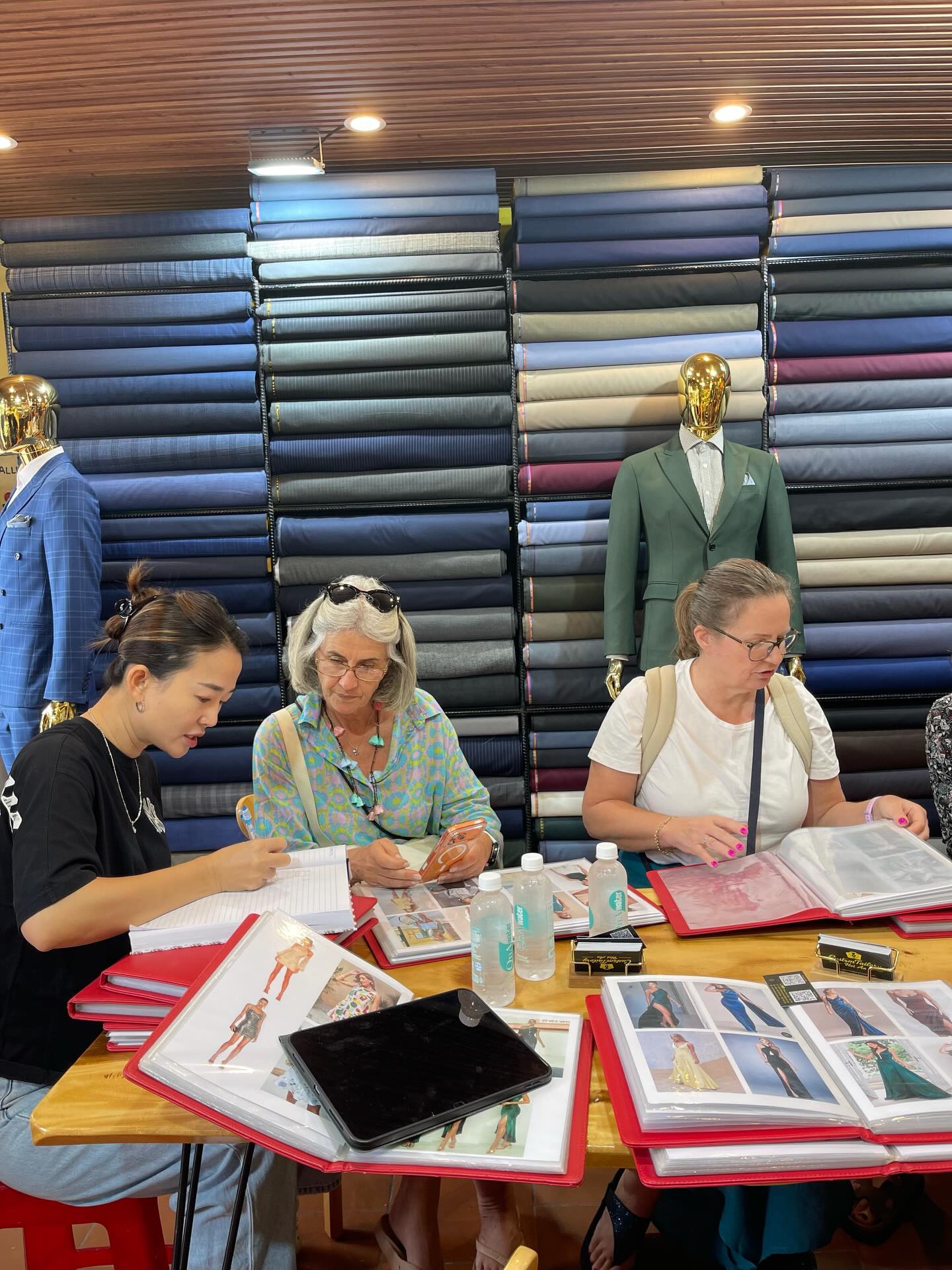
When coming to Hoi An, clients are often not just looking for a simple fashion product, but rather a complete, personalized experience. A custom-designed suit or dress must not only look beautiful but also fit the wearer’s silhouette, style, and purpose perfectly.
During this journey, steps such as consultation, fabric selection, measuring, and fittings play an essential role, directly influencing the customer’s final decision. Consequently, establishments with a team of highly skilled Vietnamese tailors always hold a major advantage in retaining clients and standing out in the market.
Furthermore, the growth of services like Suit Tailors in Hoi An demonstrates the rising demand for premium attire, requiring precision and fine adjustments in every stitch. Customers look beyond the final product, evaluating the entire service journey.
The combination of traditional tailoring techniques and modern hospitality is helping Hoi An become an ideal destination for those seeking a difference in personalized fashion, while elevating the status of the Vietnamese tailoring industry on the international stage.
3. Suit Tailors in Hoi An and New Quality Standards
3.1. Requirements for silhouettes and materials
Suit Tailors in Hoi An are facing increasingly strict demands from clients, particularly international tourists and young consumers with refined tastes. A suit today is no longer just formal wear; it must clearly showcase individual style, sophistication, and suitability for specific occasions.
Against this backdrop, Vietnamese Tailors in Hoi An are forced to upgrade their measurement techniques and pattern-making structures to meet new standards. Even a minor discrepancy during the measurement process can directly impact the fit, thereby diminishing the customer’s overall experience.
In addition to the silhouette, fabric selection has become a pivotal factor. Customers care more about breathability, drape, shape retention, and climate suitability. Therefore, tailors need not only good technique but also the ability to recommend the right materials for each body type and specific usage purpose.
3.2. Competition among tailoring houses
Competition among tailoring workshops in Hoi An is intensifying as the bespoke demand shifts toward hyper-personalization. Establishments must compete not only on price but also on service quality, turnaround time, and customer experience.
In this environment, Vietnamese tailors play a decisive role in retaining clients. Consistent craftsmanship, excellent detail management, and a professional service attitude become the core factors that help workshops build a sustainable competitive edge.
Additionally, the emergence of modern concepts like Custom Tailory Hoi An is making the market more dynamic. These units often apply optimized processes from consultation to completion, forcing traditional workshops to improve their workflows and upgrade their team’s skills.
This shows that the tailoring market in Hoi An is no longer a purely static one; it is shifting toward a high-quality competitive phase, where Vietnamese tailors must continuously upgrade their skills to adapt to the diverse demands of clients.
4. Custom Tailory Hoi An and Modern Bespoke Trends
4.1. The intersection of traditional techniques and modern technology
Custom Tailory Hoi An represents the modern tailoring trend in Vietnam, where the combination of traditional craftsmanship and modern measurement technology is increasingly apparent. This not only ensures higher accuracy in every garment but also optimizes the entire workflow from consultation to delivery.
Amidst the development of personalized fashion, Vietnamese tailors play a crucial role in adapting to new technologies. Utilizing modern measurement tools alongside long-standing artisanal experience helps tailors minimize errors while ensuring a higher level of product refinement.
As a result, clients can save significant time while still receiving products that meet their exact requirements regarding fit, material, and style. The tailoring process is no longer purely intuitive but has become more standardized, enhancing the overall experience and building service trust.
4.2. The value of customer experience
Today’s clients are not merely looking for a piece of clothing; they focus on the entire service journey. From fabric selection, style consultation, and measuring to fittings and final alterations, every step is personalized to suit each individual.
This shift requires tailoring houses to place more emphasis on the experience rather than just focusing on the final product. Vietnamese tailors in the modern model do not just execute sewing techniques; they participate deeply in the consultation process, helping clients make choices that best suit their style and usage needs.
Particularly at establishments like Custom Tailory Hoi An, customer experience is viewed as the core element. Each client is served according to a dedicated process, ensuring maximum comfort, accuracy, and personalization. This elevates the value of the tailoring industry in Hoi An, affirming the position of Vietnamese tailors in the rapidly growing fashion service market.
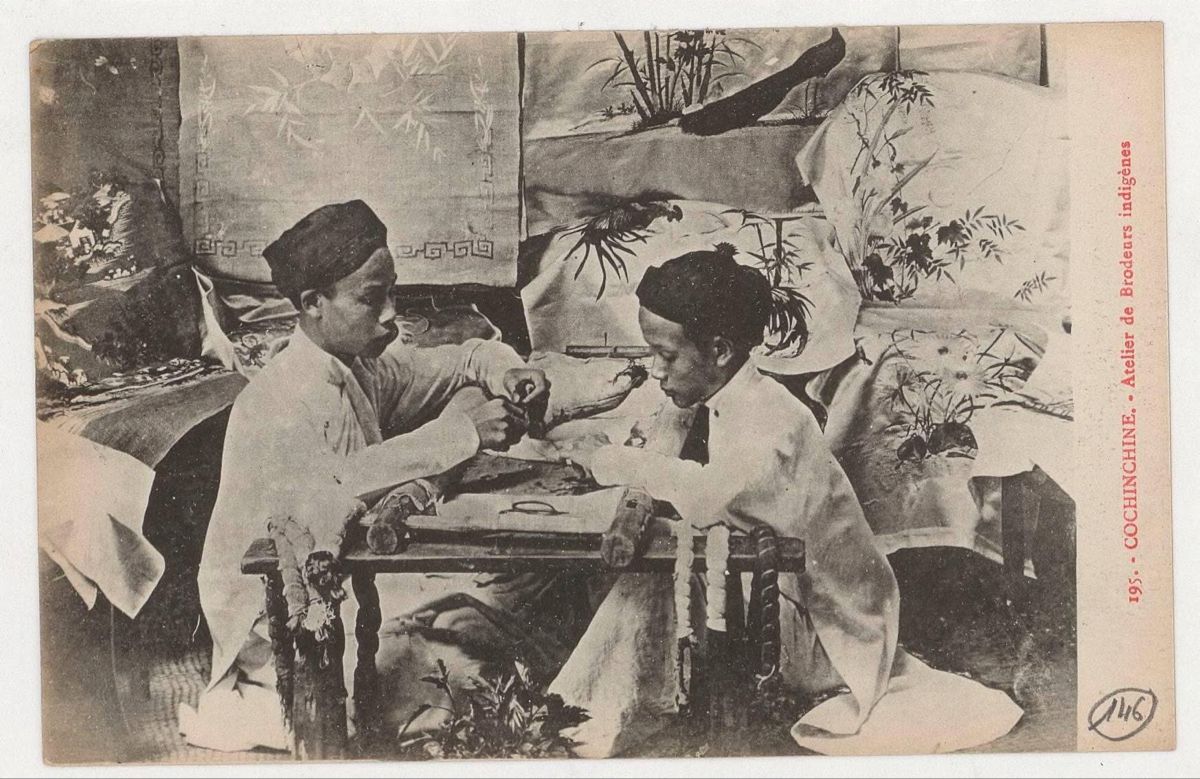
The combination of modern technology and traditional craftsmanship has helped elevate Vietnam’s tailoring industry. This is also one of the key factors behind the reputation of Vietnamese tailors in Hoi An, where the art of bespoke tailoring has been preserved and passed down through generations. Learn more in the article “Vietnamese Tailors and the Art of Handcrafted Tailoring in Hoi An.”
5. Best Tailor in Hoi An – Evaluation Criteria
5.1. Quality standards and product accuracy
The Best Tailor in Hoi An is evaluated not just by reputation, but most importantly by product quality and precision in every detail. Every stitch must reflect meticulousness, durability, and a perfect match with each customer’s measurements.
In today’s competitive environment, Vietnamese tailors in Hoi An must constantly hone their craft to meet increasingly demanding standards. Bespoke products must not only fit well but also ensure aesthetic appeal, balanced silhouettes, and impeccable finishing touches on minor details.
Moreover, clients are increasingly attentive to the total experience, from fabric quality and color palettes to real-life practicality. Therefore, reputable tailors always focus on quality control at every stage to ensure the final product reaches the highest level of refinement.
The above criteria not only reflect the quality of service but also provide a solid basis for customers to evaluate and choose the best tailor shop in Hoi An that suits their needs. To learn more about the key factors to consider when selecting a tailor, you can refer to the article “The Best Tailor Shop in Hoi An: 5 Criteria for the Modern Gentleman.”
5.2. Consultation and after-sales service
In addition to product quality, consultation and after-sales services are vital factors in identifying the Best Tailor in Hoi An. Clients do not just need a beautiful garment; they require support throughout their usage journey, from initial guidance to post-delivery adjustments.
In this context, Vietnamese tailors play an important role not only in technical tailoring but also in communication and client consultation. Understanding specific needs, styles, and purposes allows tailors to provide suitable solutions, thereby boosting customer satisfaction.
In particular, after-sales services such as alterations, letting out, or taking in garments after completion make a distinct difference among tailors. Establishments that excel in this area tend to see higher customer return rates, establishing a sustainable reputation in the Hoi An tailoring market.

6. Challenges and Opportunities for Vietnamese Tailors
6.1. Competitive pressures from the international market
In a period of strong integration, Vietnamese Tailors face mounting competition from international brands. These brands often hold advantages in standardized production lines, modern technology, and strict quality management systems, putting significant pressure on traditional local workshops.
Furthermore, international client expectations are becoming stricter, particularly regarding precision, turnaround speed, and service experience. Clients do not just want beautiful products; they require fast, transparent workflows with high personalization capabilities. This forces Vietnamese tailors to continuously upgrade skills, improve processes, and adapt to global standards.
Additionally, the rapid pace of fashion trends presents a major challenge. Without timely updates on styles, materials, and aesthetics, tailoring units can easily fall behind in this increasingly fierce competition.
To withstand these mounting pressures, progressive tailoring houses are redefining their competitive strategy by shifting from defensive survival to aggressive specialization. Instead of competing directly on mass-production speed, local artisans are doubling down on niche luxury positioning and sustainable fashion practices—areas where rigid international corporations struggle to pivot. By forming collaborative networks, sharing technology investments, and embracing eco-friendly local textiles, traditional workshops are turning their smaller scale into an asset of agility and authentic heritage. This proactive adaptation is proving that the ultimate shield against global market disruption is the irreplaceable touch of localized expertise combined with a modern, customer-centric business mindset.
6.2. Opportunities from tourism and service export
Alongside challenges, the tailoring industry in Vietnam, especially in Hoi An, possesses massive development opportunities thanks to its tourism advantages. A steady stream of international visitors turns tailoring services into a vital part of the travel experience, rather than just a standard fashion service.
Vietnamese Tailors in Hoi An have the opportunity to interact with a diverse client base from multiple nations, thereby enhancing their skills, broadening design mindsets, and improving service quality. Serving international guests also helps elevate the position of the Vietnamese tailoring industry in the global market.
Notably, bespoke services are gradually being viewed as high-value, experiential travel products. Customers do not just buy an outfit; they “buy” the entire experience from consultation and fabric selection to final completion. This opens up great opportunities for Vietnamese tailors to develop toward high-end luxury services, blending traditional craft with modern business mindsets.
7. Future Trends of Bespoke Tailoring in Hoi An
7.1. Personalization takes center stage
In the coming years, the trend toward personalization in the bespoke industry will continue to thrive, particularly in destinations like Hoi An, where the demand for unique fashion experiences is rising. Customers are steering away from mass-produced items, prioritizing custom designs that bear their personal touch and accurately reflect their style, profession, and aesthetic taste.
In this landscape, Vietnamese tailors play an essential role in bringing their clients’ personalization needs to life. They do not just perform the sewing; they immerse themselves in the consultation process, helping clients select the ideal styles, fabrics, and design details. This enhances the value of bespoke products and creates a stark contrast to industrial fashion. Concurrently, Vietnamese tailors increasingly need to level up their skills to meet the diverse demands of both local and international clients.
Furthermore, personalization is extending into the service experience itself, as each client is guided through a dedicated journey from body shape measurement and fittings to final adjustments. This helps Hoi An’s tailoring industry maintain its steady appeal and attract more international tourists, while affirming the position of Vietnamese tailors in the growing fashion service market.
This hyper-focused dedication to the customer journey is also giving rise to “emotional branding” within the local industry. Each garment is no longer viewed as a mere transaction, but as a collaborative piece of art accompanied by a unique story—from the choice of local heritage silk to the hand-carved buttons selected during the consultation. By transforming the traditional retail model into an unforgettable interactive memory, tailors are turning first-time tourists into lifelong brand advocates. In an era where consumers crave authenticity over automated perfection, this deep blend of cultural storytelling and tailored personalization ensures that Hoi An remains an irreplaceable capital of bespoke fashion.
7.2. The trend of technology integration in tailoring
Technological advancements are driving a major shift in the tailoring industry, specifically with the introduction of 3D body scanning technology and Artificial Intelligence (AI). These innovations help gather more precise measurements, minimize human errors, and significantly cut down product manufacturing times.
Vietnamese tailors in this new era can no longer rely solely on traditional experience; they must master tech tools to boost workflow efficiency. Combining heritage techniques with modern technology optimizes the process while lifting the quality of the final output. This also brings a clear change in how Vietnamese tailors interact with customers, moving from direct physical measurements to incorporating digital data for enhanced accuracy.
Moreover, AI aids in recommending styles, analyzing fashion trends, and proposing suitable fabrics for each individual. This not only allows tailors to work more efficiently but also upgrades the overall customer experience throughout the tailoring journey in Hoi An. As a result, Vietnamese tailors can adapt faster to the modern market, raising the global value of Hoi An’s bespoke services.
Furthermore, this digital transformation opens up a massive opportunity for “remote tailoring” (may đo từ xa) – a trend that is rapidly expanding in 2026. International tourists who have visited Hoi An can now easily re-order custom outfits from anywhere in the world. By storing the precise 3D body data cloud-managed by AI, tailoring houses can seamlessly update a customer’s profile and create new garments without requiring a physical second fitting. This bridge between local craftsmanship and global digital infrastructure ensures that the connection between international clients and Hoi An’s fashion scene remains sustainable, highly scalable, and future-proof.

Conclusion
The Vietnamese Tailor market is transforming dynamically alongside the personalization trend.
In Hoi An, bespoke tailoring is no longer just a traditional trade; it has evolved into a vital element of the travel and modern fashion experience.
The growth of concepts like Custom Tailory Hoi An, coupled with the increasing demand for Suit Tailors in Hoi An and the Best Tailor in Hoi An, points to the immense future potential of this industry.
At the same time, technological integration, faster production timelines, and more refined craftsmanship are reshaping customer expectations. Tailoring services are now focusing not only on fit and fabric quality but also on delivering a complete lifestyle experience that blends fashion, culture, and individuality.
📍 Address: 117 Phan Chu Trinh, Hội An Google Map
📞 Hotline: 0901 529 953
🌐 Fanpage: Customtailory Hội An
🌐 Website: https://www.customtailoryhoian.com/