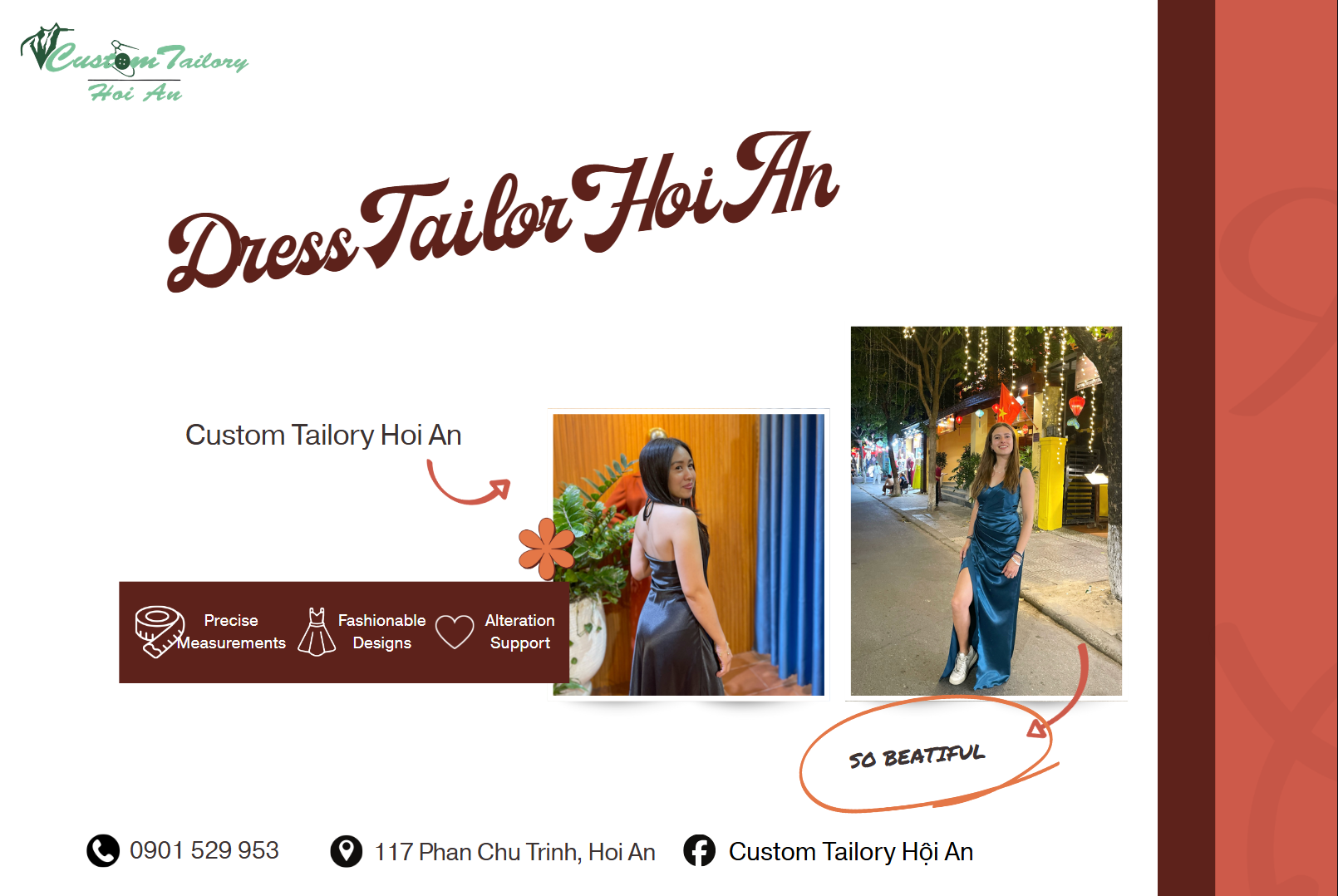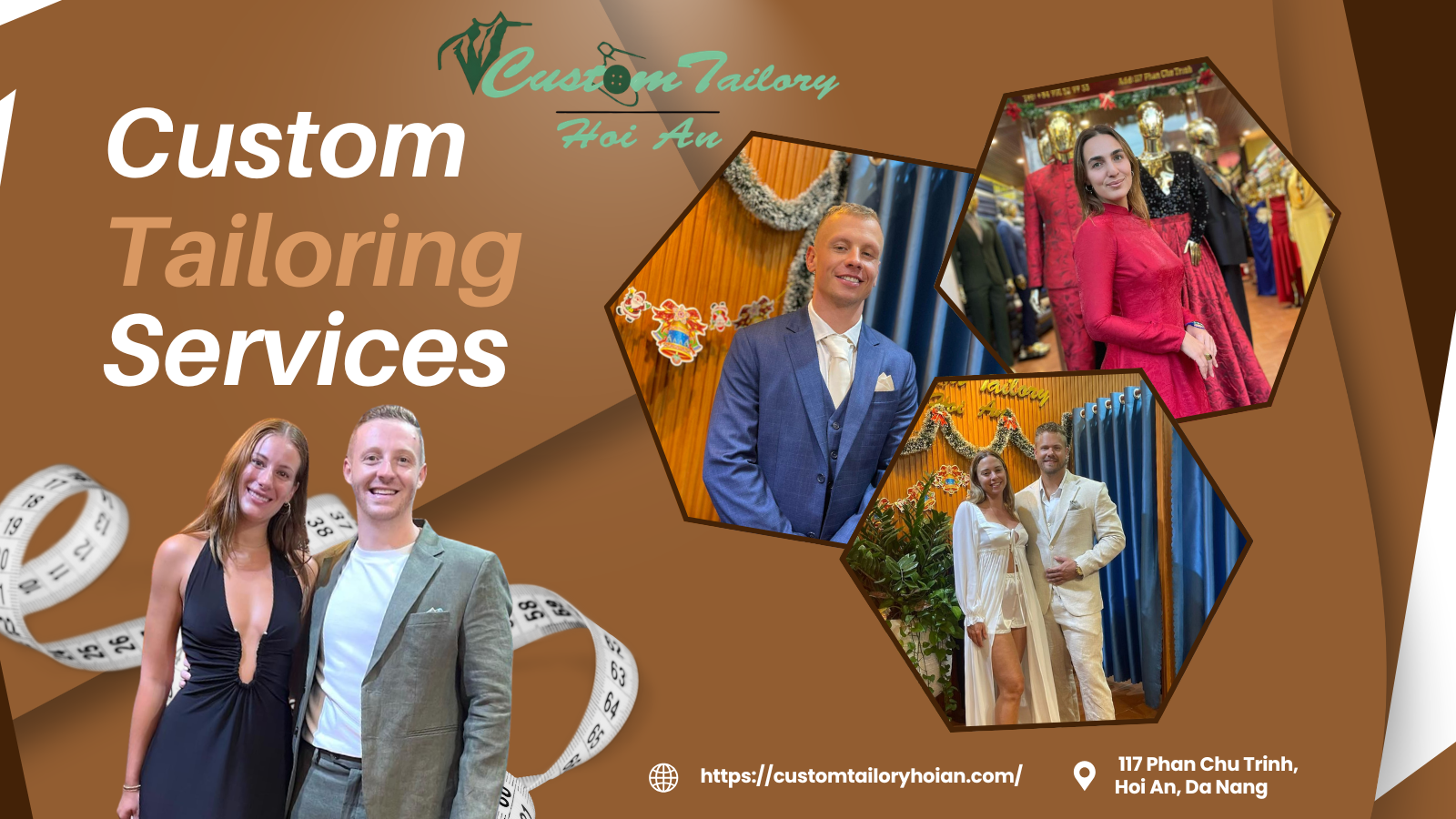
A reputable Hoi An Tailor Shop provides high-quality custom tailoring services with a clear process from consultation and measurements to fitting and adjustments before delivery. This article analyzes why you should choose professional tailoring instead of standard tailoring, while clarifying material standards, finishing techniques, and post-delivery policies. In this article, Custom Tailory Hoi An will help you understand how proper fit, durability, and on-time delivery are ensured.
1. Why customers need a reputable Hoi An Tailor Shop instead of a regular tailor
In reality, many tourists and business professionals visiting Hoi An often need to have vests, suits, or shirts tailored within a short timeframe. However, if they choose an inexperienced shop, the final product may suffer from improper fit, fabric quality different from what was advised, or delayed delivery compared to the commitment. This directly affects work plans and personal schedules.
Choosing a reputable Hoi An Tailor Shop helps reduce risks related to quality and timing. A professional establishment will have a clear process from consultation and measurement to fitting and completion. When garments are tailored with proper techniques, the wearer gains more confidence in business environments, events, or meetings with partners.
To better understand this, it is necessary to analyze common mistakes made at less professional establishments and their specific impact on garments.
1.1 Measurement inaccuracies and improper fit in unprofessional tailoring
Measurement errors are common when tailors lack experience or measure too quickly to meet deadlines. Typical issues include shoulders that are too wide or too tight, uneven sleeve lengths, trousers pulling at the hips, or excess fabric at the thighs. These inaccuracies disrupt overall balance, and even high-quality fabric cannot compensate for them.
An improper fit can also cause discomfort during movement. A vest that pulls at the button, trousers that do not fit properly at the waist, or overly wide pant legs can make the outfit look untidy. When choosing a Hoi An Tailor Shop with a detailed measurement process and careful verification of each specification, these issues are significantly minimized.
In addition to measurements, fabric quality and stitching techniques directly determine durability and long-term value.
1.2 Fabric quality and stitching determine product durability
Standard fabrics often have lower fiber density, wrinkle easily, and lose shape after a period of use. In contrast, materials such as wool, high-quality cotton, or selected linen maintain structure better and retain color longer. When tailoring at a reputable Hoi An Tailor Shop, customers receive clear consultation regarding fabric origin and characteristics to match their intended use.
Stitching is also an important factor that is often overlooked. Loose or uneven stitches, or poorly handled lining, can cause garments to unravel or lose structure after only a few washes. In contrast, precise tailoring techniques help maintain structural stability and ensure long-term durability.
2. How high-end custom tailoring services at Hoi An Tailor Shop are implemented
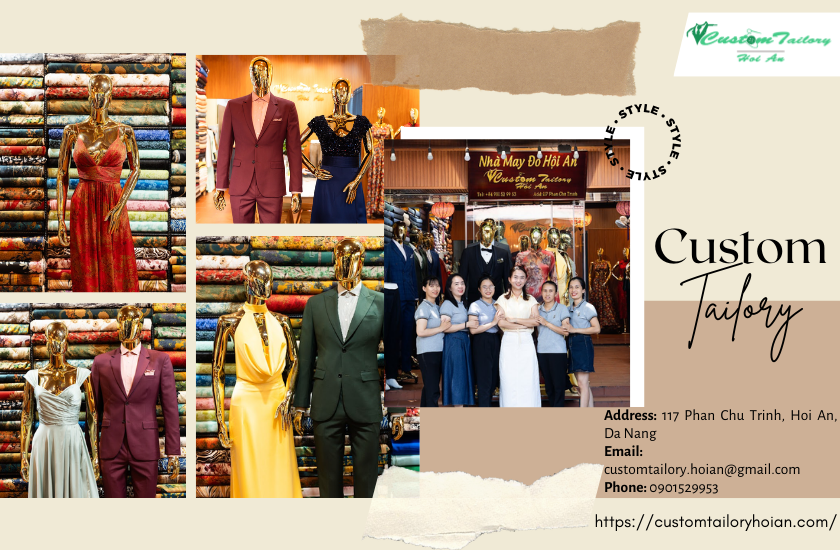
At Hoi An Tailor Shop, high-end custom tailoring services are carried out under a clearly controlled quality process from consultation to completion. Each step is handled by designated staff and cross-checked to minimize errors. This process ensures high accuracy in measurements, fit, and delivery time.
Unlike fast tailoring that focuses solely on finishing products quickly, Hoi An Tailor Shop emphasizes each specific stage. Customers receive thorough consultation before fabric cutting and always have a fitting session for necessary adjustments. Below are two key stages that directly determine the overall quality of the garment.
2.1 Style consultation based on body shape and purpose of use
Before taking measurements, customers are advised on styles suitable for their height, weight, and body proportions. For example, individuals with broad shoulders should choose moderate lapels to avoid a rigid appearance, while those with sloping shoulders may require light padding for balance. The choice between slim and regular fit also depends on body shape and desired comfort.
Purpose of use also influences overall design. Office vests prioritize neatness and ease of movement, while wedding or event suits may adjust lapels, fabric, and fit for greater formality. At Hoi An Tailor Shop, consultation is conducted based on specific usage contexts rather than applying a single template to all customers.
After finalizing the style, the next step is taking detailed measurements and applying technical adjustments at each position to ensure precision.
2.2 Detailed measurements and technical handling at each position
The measurement process includes both basic and advanced specifications such as shoulders, chest, waist, hips, biceps, sleeve length, jacket length, and trouser length. Each measurement is carefully recorded and rechecked before fabric cutting. Accurate measurements help minimize repeated alterations later.
Beyond standard measurements, Hoi An Tailor Shop adjusts the structure according to individual body characteristics. Tall and slim individuals may require lapel width and jacket length adjustments for balance. Shorter individuals need proportional jacket and trouser lengths to avoid a segmented look. For clearly sloped or square shoulders, the tailor adjusts shoulder structure and sleeve drape to maintain stability when worn.
3. Fitting and alteration process to ensure accuracy

In high-end tailoring, in-person fitting is mandatory to achieve maximum precision. Even with detailed measurements, body posture changes during movement. Therefore, Hoi An Tailor Shop always conducts a fitting session before final completion to minimize errors.
Fittings are not only for checking size but also for evaluating the overall appearance in real-life wear. Customers are guided to stand, sit, and move lightly to assess comfort. Below are the specific steps in the fitting and alteration process.
3.1 Semi-finished fitting
At this stage, the garment is assembled but not fully completed. The tailor checks shoulder fit to ensure it neither protrudes nor collapses. Sleeve drape is evaluated to prevent wrinkles or twisting during movement.
The front and back panels are examined for balance. If pulling occurs at the button area or excess fabric appears at the back, adjustments are marked. For trousers, hip and thigh fit are assessed to avoid tightness or extra fabric when standing and sitting.
After identifying necessary corrections, the garment proceeds to technical alteration before final completion.
3.2 Technical adjustments before finalization
Common adjustment areas include sleeves, collar, waist, and trouser legs. Sleeves may be shortened or lengthened to reach the proper length, typically resting at the wrist and slightly revealing the shirt cuff. The waist is refined to ensure a snug yet comfortable fit.
Trouser length is adjusted according to height and shoe type. The collar and lapels are rechecked to ensure they lie flat and aligned. Before delivery, Hoi An Tailor Shop conducts a final inspection to ensure the garment meets standards of fit and finishing quality.
4. Material standards and product finishing
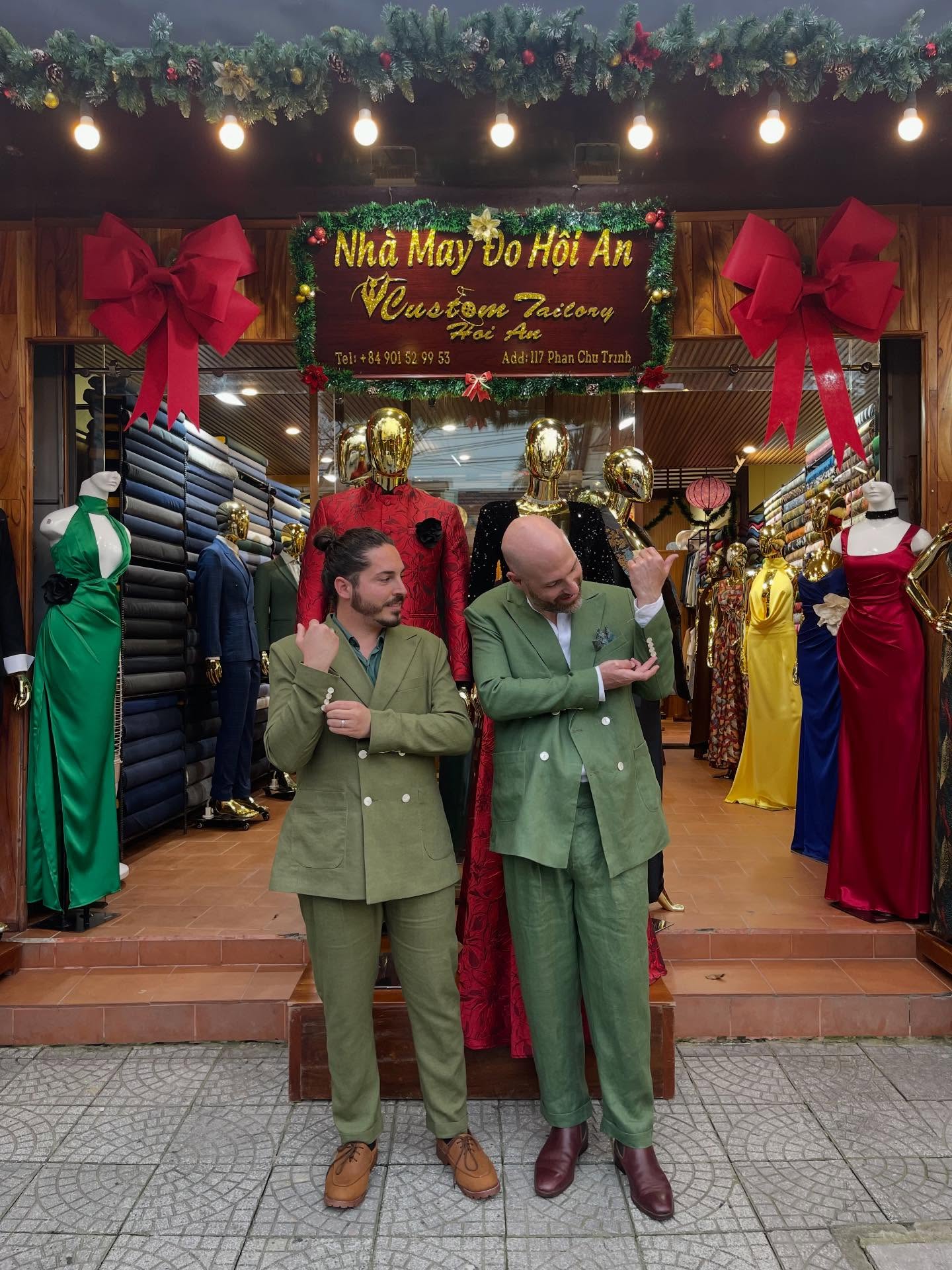
The premium quality of a garment depends not only on design but also on materials and finishing techniques. At Hoi An Tailor Shop, these two factors are controlled simultaneously throughout the tailoring process to ensure long-lasting structure and durability.
Fabric selection and stitching control follow specific standards, without neglecting the final stage. Below are the factors that directly determine finishing quality.
4.1 Fabric selection according to purpose
Each garment type corresponds to specific fabric groups. Wool is commonly used for vests and suits due to its ability to maintain structure, resist wrinkles, and provide a defined silhouette. It is suitable for office environments and formal events.
Cotton is widely used for shirts due to its breathability and comfort during prolonged wear. Linen suits hot weather thanks to its lightweight and airy properties. At Hoi An Tailor Shop, customers receive clear consultation about fabric characteristics to ensure appropriate selection.
4.2 Stitching and detail control
Stitching directly affects durability and structural stability. Stitch density must be even and firm to prevent unraveling over time. Jacket lining is sewn flat without wrinkles or misalignment.
Details such as lapels, buttons, and trouser hems are inspected before delivery. If issues such as uneven lapels, wrinkled lining, or inconsistent stitches are found, the product is immediately corrected at the workshop. Hoi An Tailor Shop performs a final inspection to ensure technical standards and long-term durability.
4.3 Structural stability and balance when worn
A beautiful vest or suit depends not only on fabric but also on how well it maintains its shape during wear. Poor tailoring can cause chest wrinkles, uneven shoulders, or folded lapels after several uses.
At Hoi An Tailor Shop, details such as shoulders, chest structure, and lapels are carefully handled to ensure a clean and balanced silhouette. Even after hours of wear, the garment maintains its structure without distortion.
This factor enhances overall neatness, especially in meetings, events, or professional environments requiring formality.
5. Service commitment and post-delivery policy
In addition to product quality, service commitment is essential for customer confidence when choosing Hoi An Tailor Shop. A reputable establishment focuses not only on tailoring but also on delivery timelines and post-delivery support, which is especially important for tourists and business professionals with defined schedules.
Hoi An Tailor Shop builds transparent policies regarding completion time and post-delivery alterations. All details are discussed clearly from the beginning to help customers arrange their plans.
5.1 Completion time and on-time delivery
Completion time is divided into standard and express packages depending on needs. The standard package typically takes 2 to 4 days depending on garment type and number of fittings, ensuring sufficient time for measurement, fitting, and technical adjustments.
For urgent requests, the express package may be shortened to 24 to 48 hours if measurements are straightforward and no complex alterations arise. Regardless of the package, Hoi An Tailor Shop ensures full inspection steps without compromising quality.
5.2 Post-delivery alteration policy
After receiving the garment, customers are still supported with minor adjustments if necessary. Cases such as slight waist tightening or loosening, sleeve length adjustment, or trouser length refinement are considered.
If weight changes occur shortly after tailoring, the shop evaluates alteration feasibility based on the original structure. This policy provides long-term assurance when choosing Hoi An Tailor Shop for ongoing tailoring needs.
CONCLUSION
Choosing a reputable Hoi An Tailor Shop ensures garments meet standards of measurement accuracy, fit, and finishing quality. From consultation and measurement to fitting and material control, every step follows a clear process. On-time delivery and post-delivery alteration support further enhance long-term confidence. If you have questions or need detailed consultation, contact Custom Tailory Hoi An for precise and dedicated assistance.
📍 Address: 117 Phan Chu Trinh, Hội An, Đà Nẵng
🌐 Fanpage: Customtailory Hội An
📞 Hotline: 0901 529 953
🌐 Website: https://customtailoryhoian.com/