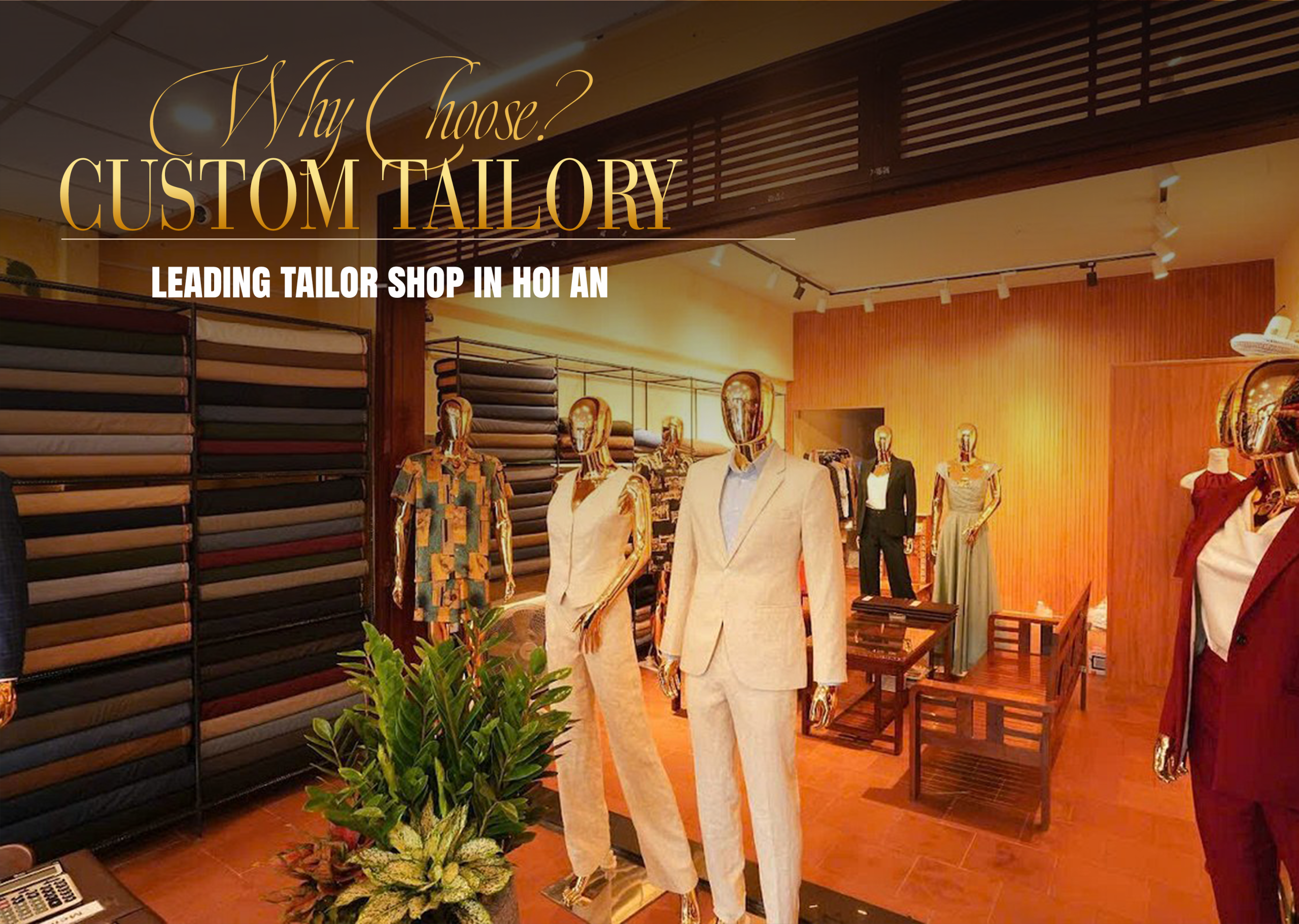
Getting clothes made in Hoi An can be fast, but quality varies. This guide explains how to judge hoi an custom clothing before you pay: check real finished items, ask what fabric is used, confirm fitting sessions, and set a clear delivery time. It also shows what to look for during the first try-on so you can request precise fixes. In this article, Custom Tailory Hội An will share a simple checklist to help you choose a reliable tailor and avoid common mistakes.
1. Define your needs before choosing hoi an custom clothing
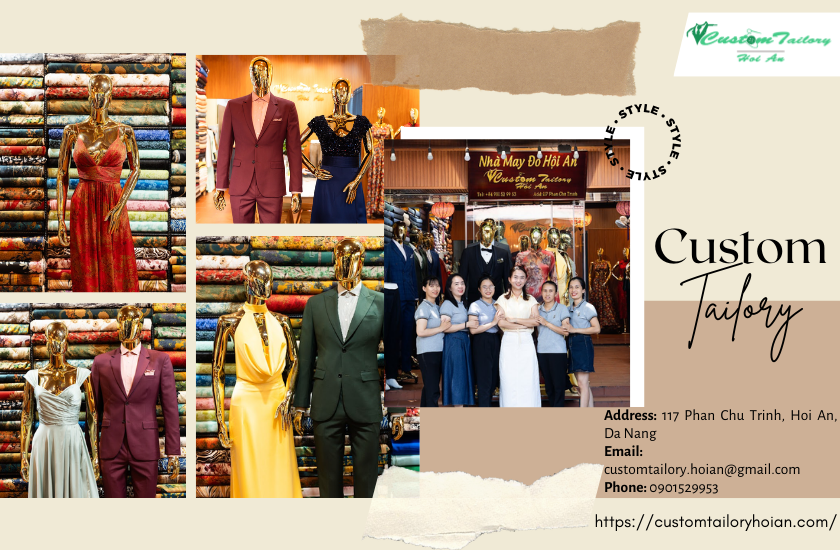
Start by deciding what you want to make: shirt, trousers, dress, suit, or jacket. Each item needs different structure, fabric weight, and time. When you explain the use case (work, travel, event), the tailor can recommend a suitable cut and fabric.
Write down your must-haves, such as fit style (slim or relaxed), sleeve length, rise height, or lining. If you have a garment that fits well, bring it for reference. This reduces misunderstandings, especially when you are ordering multiple items in a short stay.
Use the steps below to turn your idea into clear instructions a tailor can follow.
1.1. Bring clear references and a fit note
Choose 2 to 4 reference photos that show the front, back, and key details like collar, lapel, waistband, or hem. Point to what you want to keep and what you want to change. For example, “Same collar, but longer sleeves,” or “Higher rise, straight leg.”
Add a short fit note based on your real problems, such as tight shoulders, gapping waist, or sleeves always running short. A good tailor can adjust the pattern, but only if you describe the issue clearly. This also helps when you compare different shops.
1.2. Plan your schedule in Hoi An
Simple items can sometimes be done quickly, often within 24 to 48 hours, but the process still needs at least one fitting to confirm the shape. For complex pieces like suits, structured jackets, or fitted dresses, allow more time for fittings and alterations. Many travel and tailor guides recommend planning around 3 to 5 days for higher-risk garments, especially if you want multiple fittings.
2. How to spot a reliable tailor shop
A reliable shop explains the process, writes down details, and gives you a realistic timeline. You should feel that the staff understands your request, not that they are pushing you to pay quickly. Clear communication usually matters more than a perfect storefront.
Do not rely only on online reviews. Visit in person, check real examples, and ask basic process questions. The answers will show whether the shop has a working system or is improvising for each customer.
When you step into a shop, focus on these checks first.
2.1. Ask to see real finished items and inspect the basics
Request to see finished items that are similar to what you want. Look for straight stitching, even seam lines, clean inside finishing, and secure buttons. If possible, check a jacket lapel roll, trouser crease line, or shirt collar shape to see if it holds form.
If the shop only shows photos and avoids real samples, the risk is higher. Real samples also help you compare fabric weight and drape. This matters because some fabrics look good on a rack but feel hot, stiff, or too thin in daily use.
2.2. Get an itemized quote and clear payment terms

Ask for pricing by item and by material option, including lining, special buttons, pockets, and any extras like monograms. Confirm the number of fittings, expected delivery time, and what counts as a free adjustment. Put key points in a note or message so both sides can follow the same plan.
Deposits are common in Hoi An tailoring, and many shops ask for around 50 percent upfront, with the balance paid at pickup. The exact amount can vary, so treat a clear written agreement as part of “quality,” not just price.
3. Follow a fitting-based workflow to protect quality
A fitting-based workflow is the safest way to control quality when you order hoi an custom clothing. The standard steps are consultation, fabric choice, measurement, first build, fitting, alteration, and final delivery. This structure matters because the first build is rarely perfect on the first try, especially if you have uneven shoulders, a forward posture, or prefer a specific fit style. If a shop says fitting is unnecessary, you should be cautious. This is a common risk with trousers and suits, where even small errors become obvious when you walk, sit, or raise your arms.
A fitting is where problems get fixed early, before final stitching locks the shape. During this stage, the tailor can adjust balance, ease, and length based on how the garment sits on your body, not just on measurements. Plan fittings as a requirement, not an optional extra, because this is one of the most practical ways to judge hoi an custom clothing quality in real life. When a shop schedules fittings clearly and records changes in writing, you are more likely to get a stable fit and a cleaner final finish.
Use the fitting sessions below as quality checkpoints. If you follow them, you reduce the chance of ending up with a garment that looks fine on a hanger but feels wrong when worn.
3.1. First fitting: A fast checklist before you approve changes
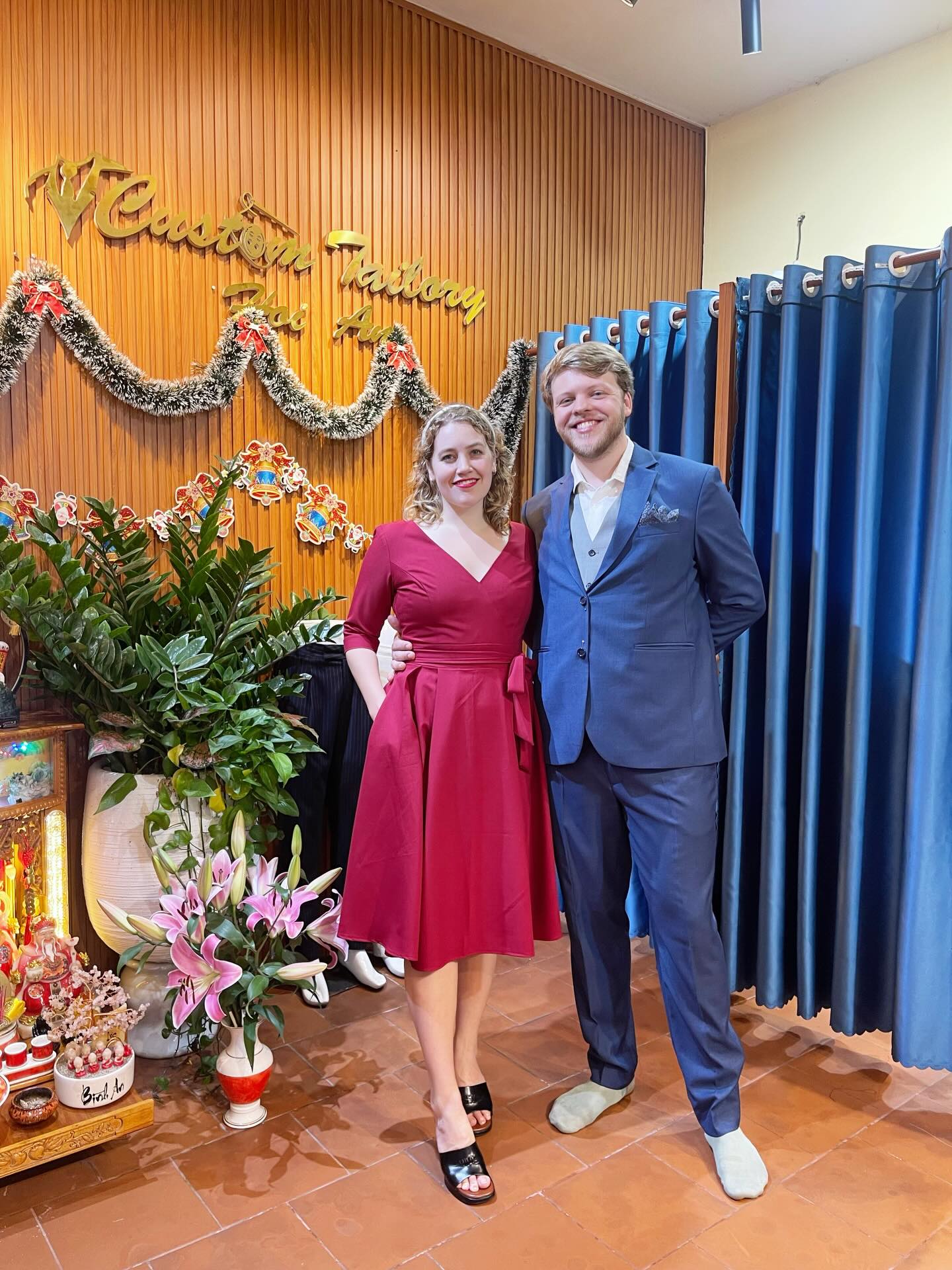
At the first fitting, focus on the structure first, then fine details. Check the shoulders first, then chest, waist, hips, sleeve length, and hem. On a shirt, the shoulder seam should sit close to the edge of your shoulder without dropping down. The collar should feel comfortable when buttoned, without choking or leaving a wide gap.
On trousers, check the waistband position and whether the rise feels comfortable when you sit. For hoi an custom clothing, this first fitting is also where you confirm the general silhouette, so do not skip movement tests. Raise your arms, sit down, and take a few steps to see if the garment pulls, twists, rides up, or creates strong wrinkles around stress points—details that matter for hoi an custom clothing.
For shirts, button fully and test arm movement to check back and underarm space, especially if you’re evaluating hoi an custom clothing quality. Look for pulling lines from the buttons across the chest, or tightness at the upper back when you reach forward—common issues in rushed hoi an custom clothing.
For jackets and suits, pay attention to balance: the front and back length should feel even, and the lapel should sit flat without rolling out too far, a key standard for hoi an custom clothing.
For trousers, check the thigh and knee area by walking and sitting, which is essential for hoi an custom clothing comfort. If the fabric strains at the thigh or creates deep horizontal lines, you likely need more room or a different cut—ask directly when doing hoi an custom clothing fittings.
These checks help you judge whether the shop can deliver consistent hoi an custom clothing, not just a quick output—this consistency defines good hoi an custom clothing.
When you find issues, communicate fixes in a way the tailor can execute, which is part of getting great hoi an custom clothing results. Ask the tailor to pin and mark changes directly on the garment—this is a best practice in hoi an custom clothing.
Repeat the adjustments in simple, measurable words like “Shorten sleeves 1 centimeter,” “Add room at the thigh,” “Take in the waist slightly,” or “Lower the hem a little,” so your hoi an custom clothing alterations are clear.
Then ask them to write the changes down on the order sheet or in a message—this protects your hoi an custom clothing order. This keeps the correction precise and reduces guesswork, which is crucial for hoi an custom clothing accuracy.
It also protects you if you are ordering multiple pieces of hoi an custom clothing and want all of them to follow the same fit logic for hoi an custom clothing.
3.2. Second or third fitting: Lock in the final details
Many guides describe 2 to 3 fittings for good results, with extra sessions if needed for complex garments. Use this stage to confirm small details like cuff width, collar height, trouser break, and jacket balance.
Do not rush the last check. Walk, sit, and check symmetry on both sides. If anything still feels off, ask for adjustment before final finishing. Small changes are easier now than after the garment is fully completed.
4. Reduce risk when ordering fast in Hoi An

Fast orders increase risk because there is less time to correct fit and finishing. The easiest solution is to start early in your trip and schedule the first fitting as soon as possible. Avoid booking your first fitting on your final day.
Also reduce risk by keeping records. Save photos of your chosen design, your measurement sheet if provided, and a short list of agreed details. This is useful if you order more than one item or return for another round later.
These two steps help most travelers avoid the most common problems.
4.1. Confirm alteration policy and a realistic delivery time
Before you pay, ask what happens if the fit is wrong compared to the written agreement. Confirm whether adjustments are free, how long they take, and when the shop can realistically deliver after each fitting. If the answer is vague, the risk goes up.
For complex items, plan extra time, not the minimum. Several guides recommend allowing multiple days for structured garments and not scheduling tailoring on the last day of your stay.
4.2. Save measurements and care notes for future orders
After pickup, take a photo of the final garment on you and note what you would change next time. Also save key measurements like shoulder width, chest, waist, sleeve length, and trouser rise. This makes future orders faster and more consistent.
Ask for basic care instructions based on fabric type, including washing method and whether ironing is safe at high heat. Correct care keeps the fit stable and helps you get better value from your hoi an custom clothing purchase.
Read more: https://customtailoryhoian.com/hoi-an-custom-clothing-wear-beautiful/
5. Quick checklist before you commit to hoi an custom clothing
Conclusion
Choosing hoi an custom clothing is easier when you follow a simple process: define the item, check real samples, confirm fabrics, schedule fittings, and keep every change in writing. During fittings, test movement, then request exact fixes for shoulders, chest, waist, sleeves, and hems before the final stitch. If your trip is short, start with simple pieces and avoid leaving the first fitting to your last day. If you still have questions or need advice, contact Custom Tailory Hội An to get guidance on fabrics, timelines, and fitting plans for your body type.
📍 Address: 117 Phan Chu Trinh, Hoi An, Da Nang – Google Map
📞 Hotline: 0901 529 953
🌐 Fanpage: Customtailory Hội An
🌐 Website: https://www.customtailoryhoian.com/