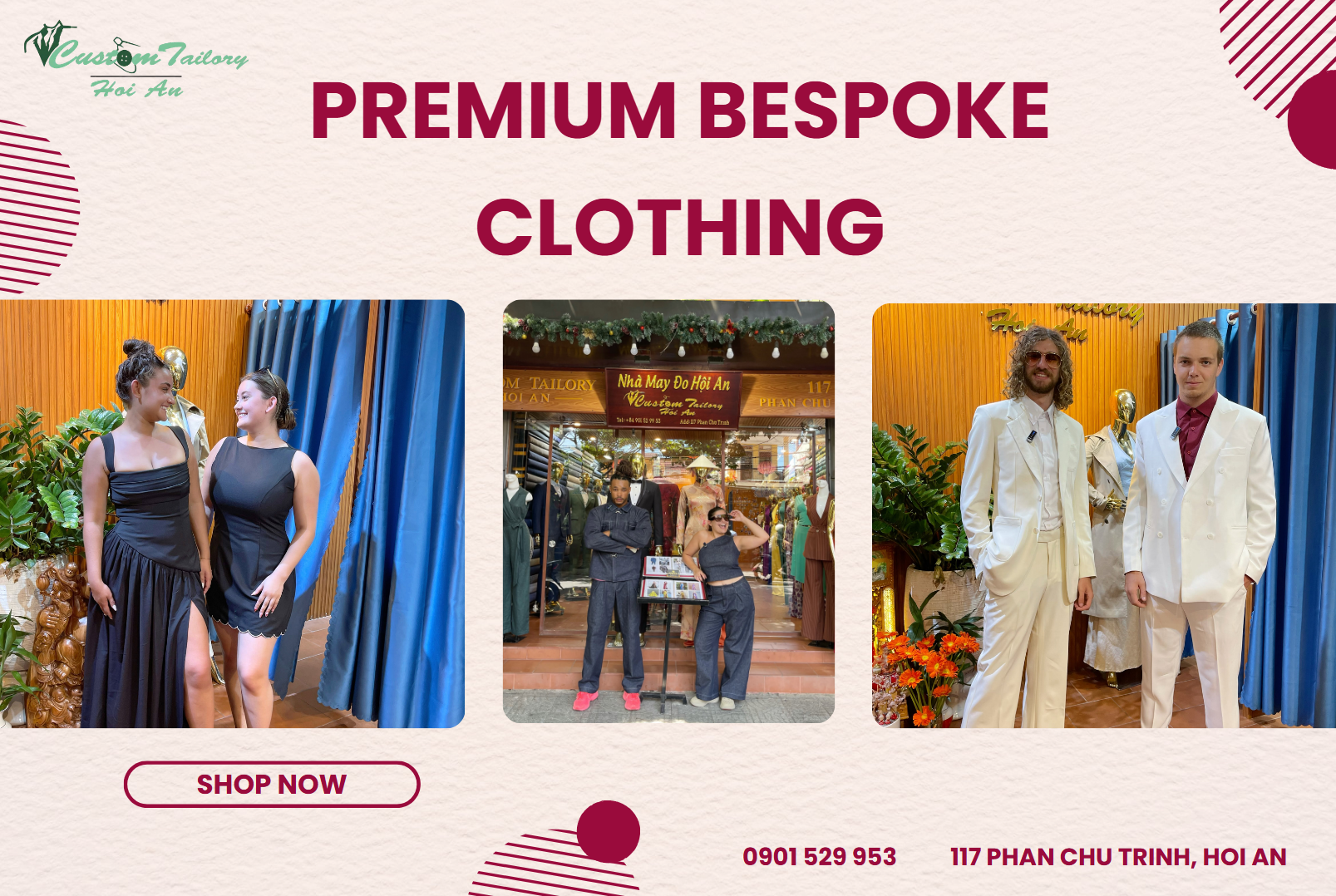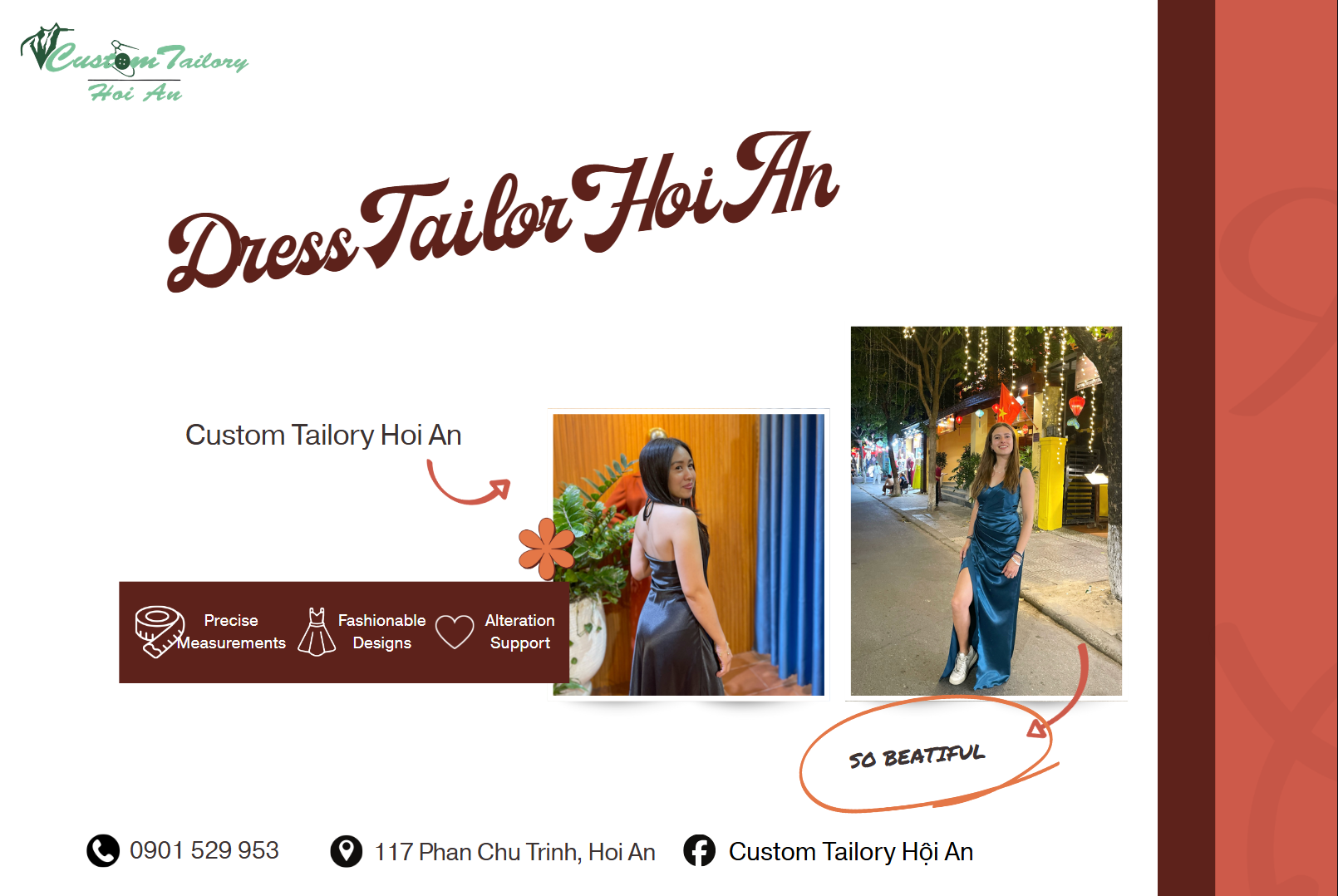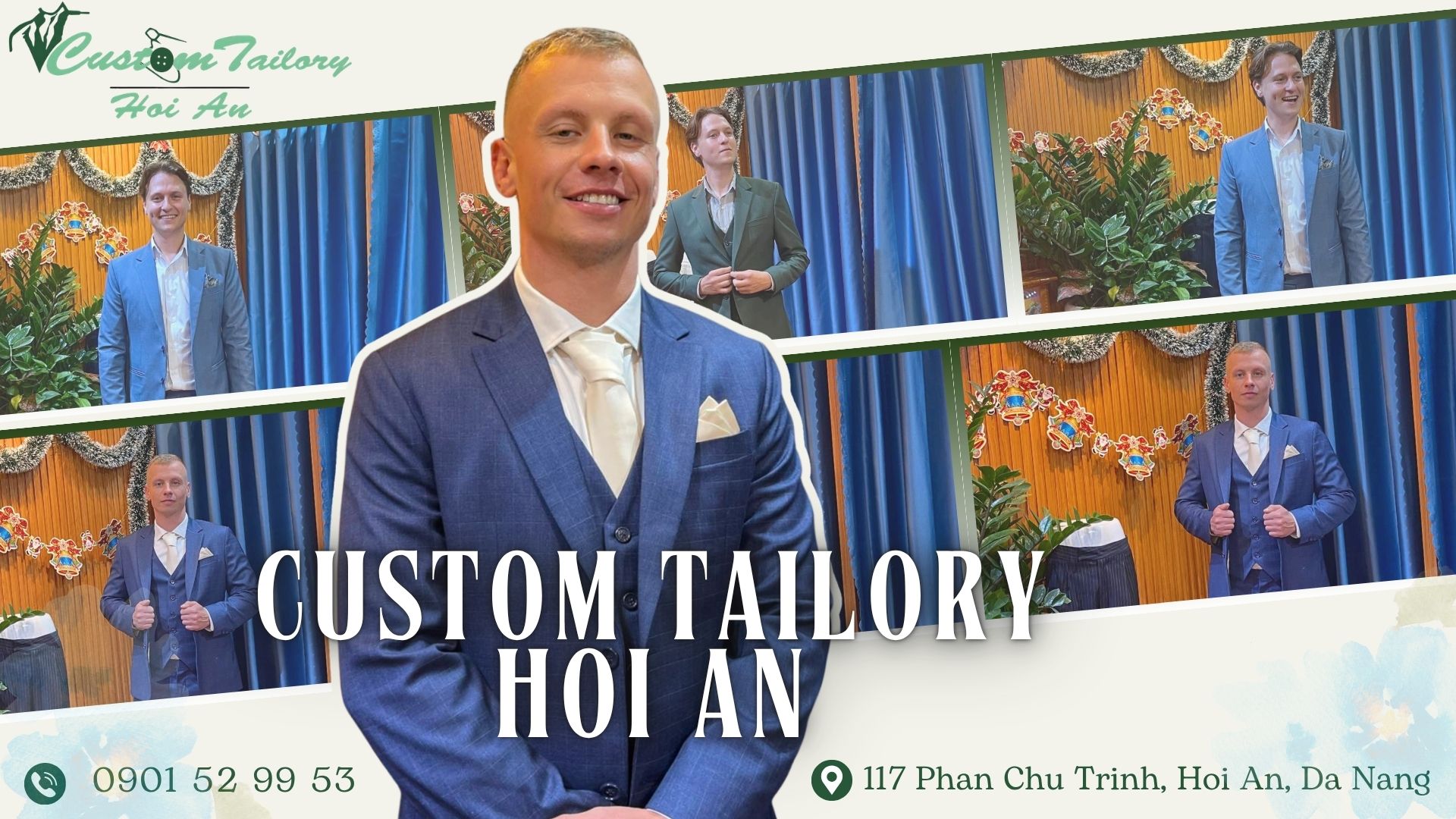
If you are looking for Hoi An custom vests services—you have come to the right place. Not because we want to brag, but because Hoi An is truly one of the few destinations in the world where you can leave with a high-quality, perfectly fitted custom suit at a fraction of the price found in major fashion hubs. This article gets straight to the point: which fabrics are suitable, how the actual process unfolds, and what you need to know so you don’t have regrets after your trip.
1. Hoi An custom vests — why do customers from all over the world flock here?
1.1. Hoi An — the tailoring capital of Southeast Asia
Hoi An is famous for more than just lanterns and its ancient town. Since the 1990s, when international tourism began pouring into Vietnam, Hoi An built a unique reputation in the manual tailoring industry. Tailor shops in Hoi An appeared in high density, with tailors passing down their craft through generations. The technique of cutting and sewing vests according to individual measurements gradually became an indispensable “specialty” of this land.
Today, tourists from the UK, US, Australia, Korea, and Japan book tickets to Da Nang and specifically spend a day or two traveling to Hoi An just to bring Hoi An custom vests back home. It’s not because they lack options in their own countries—it’s because the manual quality and price points here create a value rarely seen anywhere else in the world.
1.2. How do custom vests differ from ready-to-wear?
This is a question many people ask, but few explain directly. The difference isn’t in the label or packaging—it’s in how the vest hugs your body.
Ready-to-wear vests are produced in standardized sizes: S, M, L, XL. This standardization serves the masses, but it doesn’t serve anyone perfectly. Are your shoulders slightly wider than a size M? You buy a size L, and the waist becomes too loose. Are your arms longer than the standard? The sleeves appear uneven. These things seem small, but looking in the mirror makes them obvious.
Hoi An custom vests tailored to your measurements completely eliminate these conflicts. The tailor measures every point on your body—from shoulder width, chest circumference, and waistline to sleeve length and even shoulder slope irregularities. The vest is cut and sewn for only one person: you. The result is a vest that looks like it was born to be on your body—not like you are wearing someone else’s clothes.
1.3. The competitive advantage of Hoi An custom vests compared to the world
With the same technical standards, a custom-tailored suit in Hoi An costs only about 1/3 to 1/5 of the price in South Korea, Japan, or European countries. This doesn’t come from cutting quality—it comes from lower labor costs and a fabric supply chain that has been optimized over decades.
Furthermore, when you choose Hoi An custom vests, you don’t just receive a product—you get the experience of watching craftsmen at work, touching every type of fabric before deciding, and participating directly in the creation of your own outfit. That is something no modern fashion store can provide.
2. Types of fabrics used for Hoi An custom vests
Choosing the fabric is the step that decides 60% of the result of a custom suit. Even if you choose the best tailor in Hoi An with the most skilled tailor, the wrong fabric means a wrong start. Understanding the characteristics of each fabric helps you take initiative in the consultation process instead of leaving it entirely to the shop.
2.1. Linen — the number one choice for tropical climates
Linen is the most requested fabric when making Hoi An custom vests, and for good reason. Natural linen fibers create superior breathability—wearing it all day outdoors in Hoi An still feels comfortable. It is lightweight, drapes beautifully according to the wearer’s shape, and creates a polite yet not overly rigid look.
What many people misunderstand about linen: this fabric has natural creases when worn—especially after a few hours. This is a characteristic of natural fibers, not a sewing error. In Europe and countries with a tradition of wearing linen, the light wrinkles of this fabric are seen as a sign of stylish comfort. If you need a perfectly flat vest all day long in an office environment—linen is not the best choice for that purpose.
Suitable for: Outdoor weddings, resort events, dinner at seaside restaurants, or traveling in tropical and subtropical countries.
2.2. Wool blend — for office environments and cold climates
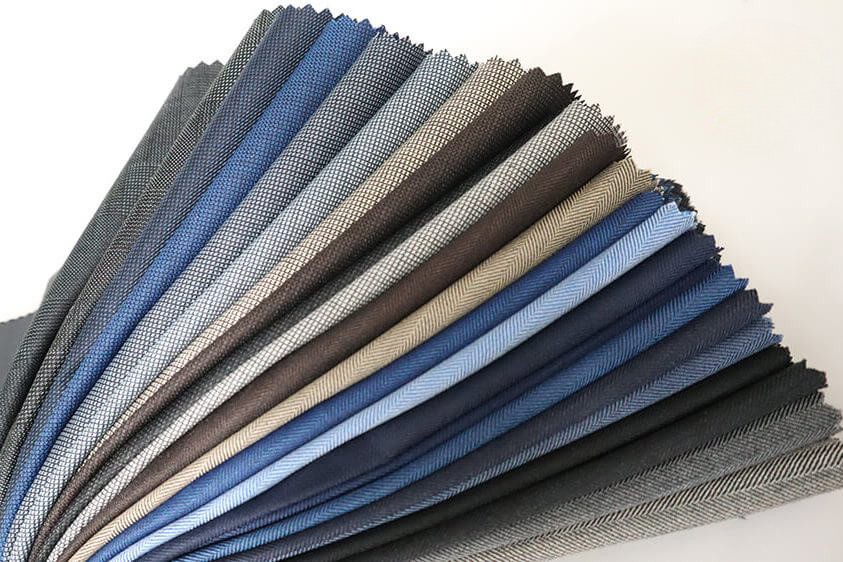
If your goal is to have Hoi An custom vests to wear in corporate environments in Hanoi, Korea, Japan, or Europe—wool blend is the practical choice. Synthetic-blended wool fabric holds its form extremely well, wrinkles significantly less than linen, and creates sharp suit lines throughout a long day.
The most common composition is 70% wool mixed with 30% polyester or 80% wool mixed with 20% viscose. High-quality blends allow the vest to keep its shape without being stiff, and are more breathable than pure wool in air-conditioned conditions. When choosing wool blend at tailor stores in Hoi An, ask clearly about the blend ratio and fabric origin—the quality of wool from Italy or England is markedly different from common wool blends.
Suitable for: Offices, formal indoor events, cool weather, and long-term wear.
2.3. Premium Cotton — flexible and versatile
Premium cotton—especially Egyptian or Pima cotton—provides a smooth hand feel, is more breathable than wool, and wrinkles less than standard linen. This is an ideal middle-ground choice for those who want versatile Hoi An custom vests: wearable for both the office and evening dinners, both domestically and abroad.
With the climate in Vietnam and most Southeast Asian countries, linen still provides more comfort than cotton in hot and humid conditions—but if you need a suit that can be used in many different circumstances, premium cotton is worth considering.
Suitable for: Multipurpose environments, people needing one suit for various occasions, and mild climates.
3. The process of making Hoi An custom vests with a standard fit — actual steps
Understanding the process helps you avoid being passive or surprised and allows you to proactively control quality at every step. This is the standard process at tailor shops in Hoi An with true craftsmanship—no shortcuts, no skipped steps.
3.1. Consultation and fabric selection
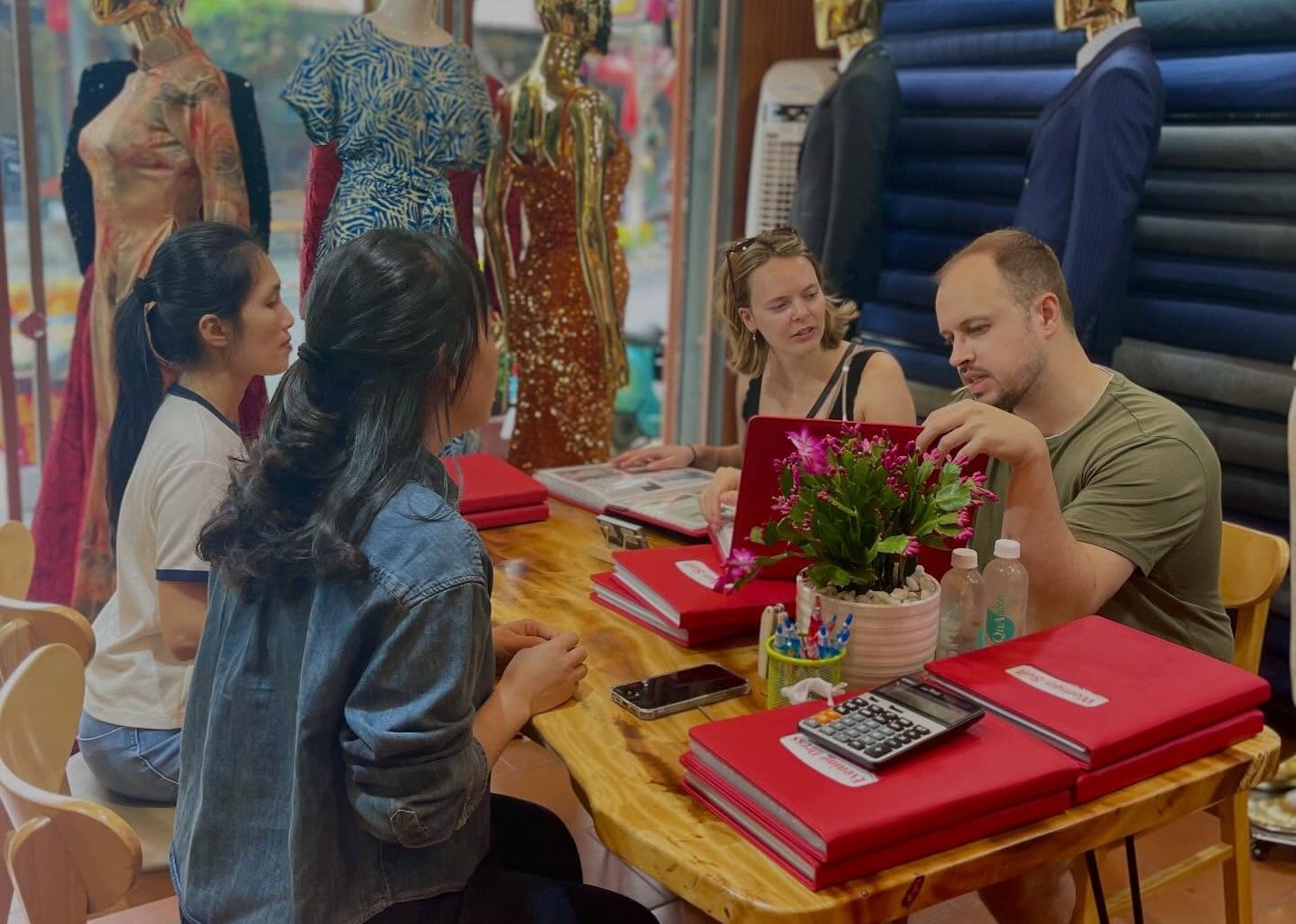
The first step isn’t measuring—it’s consultation. Experienced suit tailors in Hoi An will ask you a series of questions before suggesting anything: which occasion do you want to wear this vest for, where, in what climate, what size do you usually wear off the rack, and are there any points on your body you want to hide or emphasize?
After the consultation, you are led to the fabric room to choose in person—not by looking at photos in a catalog. Touch each type of fabric, observe how the fabric drapes, and compare them directly under natural light. This is an irreplaceable step that cannot be substituted by any online consultation, and it is the reason why visiting the shop directly always yields better results than ordering from afar.
👉 See more: Reputable Hoi An Tailor Shop – High-Quality Tailoring Service
3.2. Measuring and style sketching
Technically correct vest measurement involves at least 12 measurement points: shoulder width, upper and lower chest circumference, waist, hips, front and back body length, sleeve length, wrist, and overall height. Additionally, experienced tailors check for shoulder slope differences and the customer’s natural standing posture to adjust the cut accordingly—this is the factor that creates a clear difference when making Hoi An custom vests at a shop with real skills compared to places that only measure cursorily.
Parallel to measuring, you confirm the specific style: wide or narrow lapels, single-breasted or double-breasted, external pocket styles, whether to add a waistcoat, lining color, and other decorative details. Everything is recorded in writing, and you sign for confirmation before the tailor starts cutting the fabric—this is the key point distinguishing a place of true craft from shops that cut corners.
3.3. Sewing and finishing
After the fabric is cut, the sewing process begins at the workshop. An important factor few people ask about when ordering Hoi An custom vests is the internal construction of the jacket—the thing that decides how well the vest keeps its form over time.
There are two common types of construction: fused interlining and canvas interlining (horsehair). Fusing is cheaper and faster, but after many washes, it can delaminate and cause the lapels to bubble. Canvas construction is a traditional technique—it takes more labor, but the vest keeps its form permanently and molds better to the wearer’s body over time. Ask the shop directly: “Is this vest fused or canvas?”—the answer will say a lot about their skill and work philosophy.
3.4. Fitting and adjustments
The first fitting is a step that cannot be skipped when ordering Hoi An custom vests at a reputable shop. You try it on while the vest is in a semi-finished state—the tailor marks directly on your body the points that need adjustment: the shoulder is slightly low on the left, the waist needs to be taken in by 1cm, the sleeve is half a centimeter too long. These adjustments are made, and you try it on a second time before receiving the final product.
A serious fitting process is the reason why tailored clothing in Hoi An at reputable shops always provides results that are clearly different from places that only measure once and then deliver. Do not skip this step regardless of how much work you have to do during the day—this is the only chance to make the most accurate adjustments before leaving Hoi An.
4. Custom Tailory Hoi An — when custom tailoring becomes a memorable experience
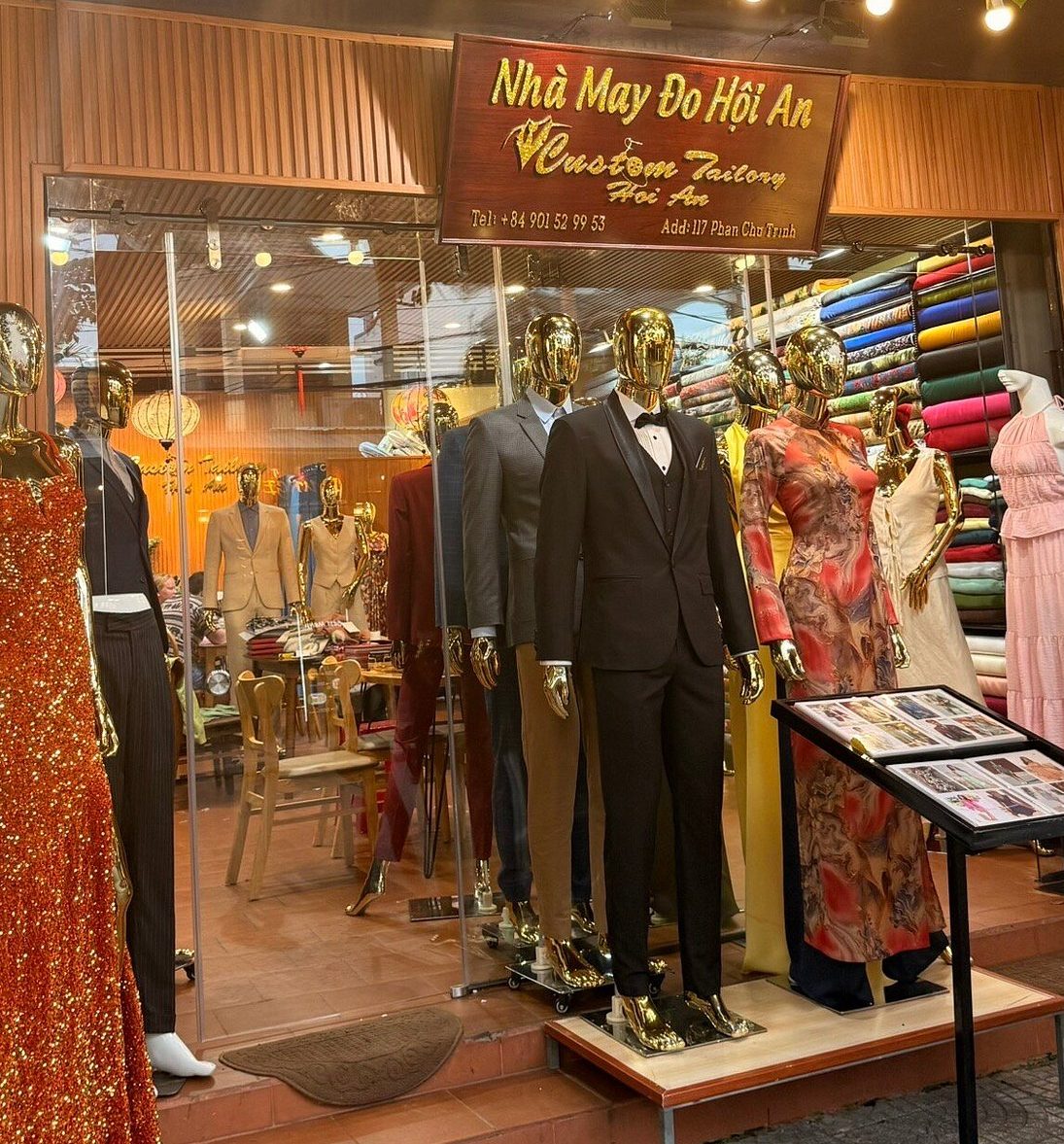
Among the tailor stores in Hoi An, Custom Tailory Hoi An is the address many tourists—both domestic and international—seek out for one simple reason: each suit is treated as an individual project, not just an order in a production chain.
The difference doesn’t lie in the sign or the storefront location. It lies in the approach to each customer: honest advice, even if it means advising to choose a cheaper fabric that is more suitable for the purpose of use. Measurements are saved in individual customer profiles. The fitting process is performed step-by-step, not shortened even when the schedule is busy. And the commitment to the result is strictly kept—not because of a mandatory process, but because it is the only way to build true trust with customers over time.
For guests coming to Hoi An on a journey from Da Nang—who only have one or two days—Custom Tailory Hoi An supports booking consultation appointments in advance via WhatsApp and Zalo, helping to optimize time from the very first morning they step into the ancient town. This is a small detail but creates a big difference when time is the one thing you cannot buy more of.
5. Things to do before ordering Hoi An custom vests
5.1. Clearly define the purpose of wearing before arriving
A vest for an outdoor wedding in Phu Quoc is completely different from a vest for an office meeting in Seoul. If you go to a shop without knowing what you need, you will depend entirely on the consultant—and that isn’t always good for you. Before ordering Hoi An custom vests, clearly determine: the occasion, the weather where it will be worn, the level of formality, and preferred colors.
5.2. Save reference photos before going to the shop
Pinterest, Instagram, or photos from magazines—any form works. Reference photos help the Suit tailors in Hoi An understand your ideas faster than any verbal description. Especially for details like lapel styles, pocket layouts, or lining colors—words are easily misunderstood, but photos make it clear.
👉 See more: Hoi An suit tailor – The elegance of a gentleman in every suit
5.3. Book at least 24 hours in advance
The best tailor in Hoi An usually has a full schedule, especially during the peak season from March to August. Contact them to book an appointment before arriving so the shop can prepare the right type of fabric you need—this is a small step but helps your entire Hoi An custom vests experience proceed much faster and more accurately.
5.4. Spend time for serious fittings
Many customers skip the fitting because they are in a hurry, only to discover back home that the vest doesn’t fit. The fitting is the only opportunity for free and most accurate adjustments—spend enough time, try it on thoroughly, and speak up if there is anything you are not satisfied with. Professional tailors don’t mind adjustments—they only mind when customers don’t speak out.
5.5. Check carefully before full payment
Check the seams, how the lapel sits, the straightness of the sleeves, and how the trousers drape at the thigh. These points are easy to observe and reflect the true craftsmanship of the place you chose for Hoi An custom vests. A reputable shop will have no problem with you checking carefully before paying the balance—this is a legitimate right of the customer.
6. Most popular vest styles when tailoring in Hoi An
6.1. Classic Two-Piece Suit
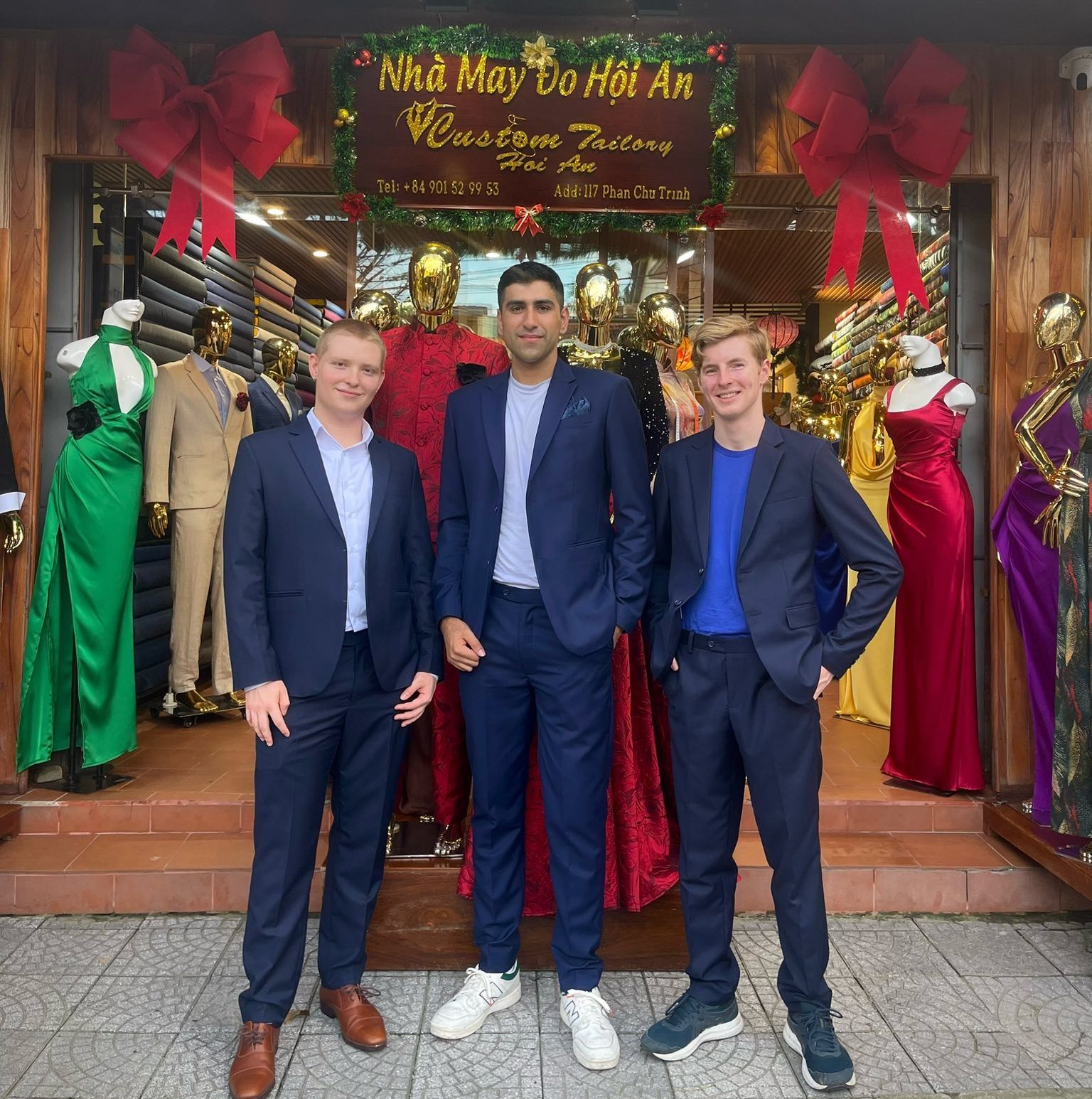
The two-piece suit consisting of a vest jacket and trousers is the most popular choice among all Hoi An custom vests orders. The style is classic, versatile in coordination, and suitable for most body shapes and occasions. The single-breasted lapel is the most requested design—both formal and modern, easy to pair with shirts with or without a tie.
6.2. Blazer paired with different colored trousers
It’s not always necessary to have a matching suit. A beige or navy blue linen blazer paired with different colored fabric trousers is a style chosen by many young customers when making Hoi An custom vests. This combination creates a dynamic, modern look, suitable for many circumstances from work to weekend outings.
6.3. Wedding vests and special events
Custom vests for weddings or special events are the segment with the highest technical requirements. Customers often bring photos of the groomsmen’s outfits or the bride’s dress to coordinate colors, or they have specific detailed requirements for the lining color, buttons, and name embroidery inside the jacket. This is the strength of tailored clothing in Hoi An – every small detail is executed exactly as requested; there is no “standard” version imposed on you.
6.4. Three-piece suit with a waistcoat
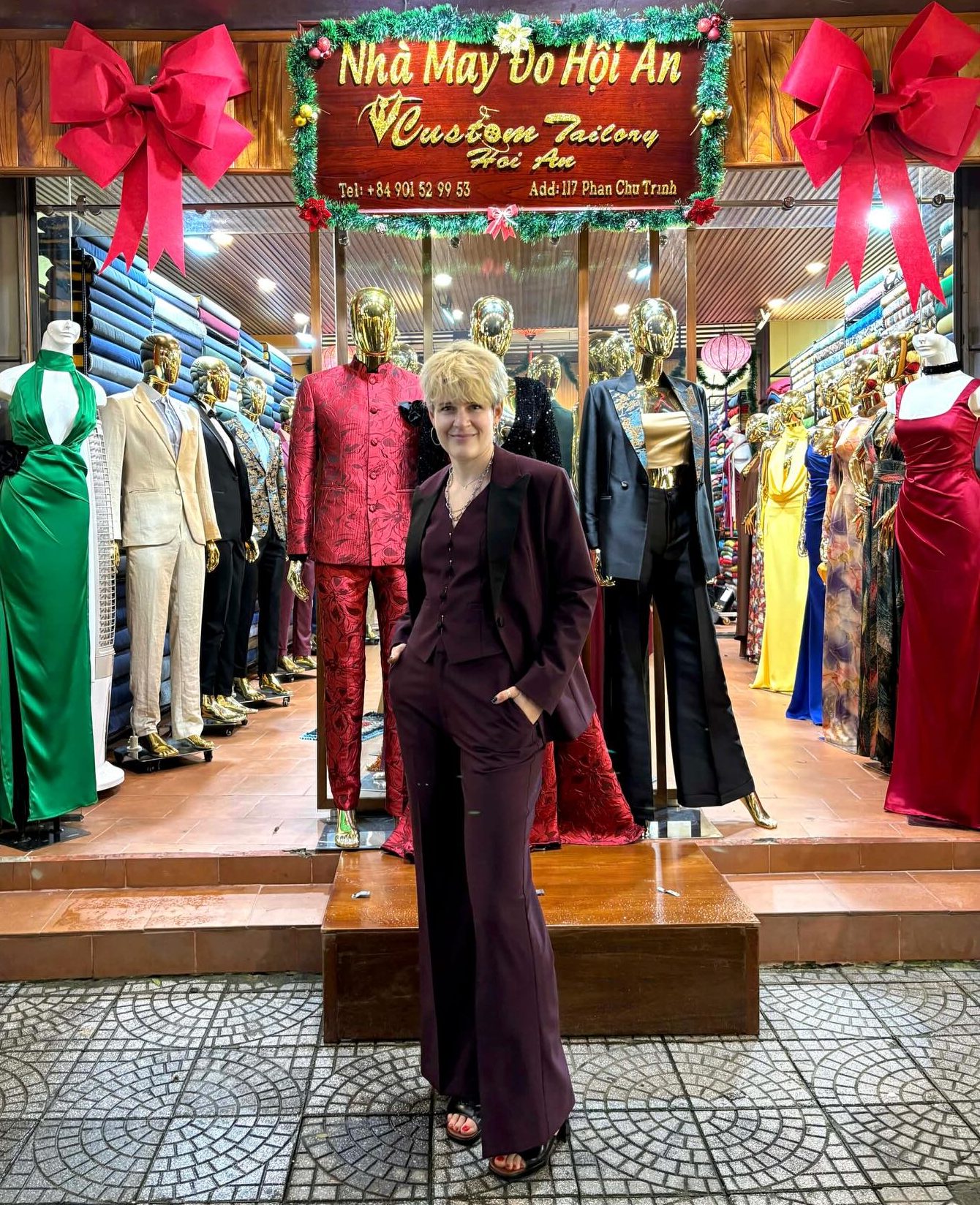
A waistcoat is a detail that significantly upgrades the formality level of a suit. When making Hoi An custom vests in a three-piece format, you can wear the outer vest jacket for formal occasions and take it off to wear just the waistcoat in more intimate settings—creating two different styles from the same outfit. This is a smart choice for those who want to maximize the value of use.
7. Frequently asked questions when making Hoi An custom vests
I am in Da Nang, can I order Hoi An custom vests and come back to collect them? Absolutely. Hoi An is about 30km from Da Nang—many customers order in the morning and return for a fitting the next afternoon. Some shops also support delivery to Da Nang for orders of 2 or more products—ask the shop to confirm first.
Can I bring sample photos from Pinterest? Yes—and you should. Reference photos help the tailor understand your ideas better than any verbal description. Especially with details like lapel styles or pocket layouts—words are easily misunderstood, but photos make it clear.
Can the finished clothes be sent back to my home country? Yes. Most tailor shops in Hoi An support packaging and provide guidance on sending via post or international express delivery. Shipping costs are calculated separately based on reality and the shipping unit the customer chooses.
What if I return to my country and find the vest doesn’t fit? This is a real question, and the answer must also be real: remote adjustments are very difficult to guarantee accuracy. Any tailor needs to see the wearer to adjust correctly. Therefore, when making Hoi An custom vests, try them on carefully before leaving the ancient town—that is the best possible warranty.
Can I bring my own fabric to the shop to be sewn? Yes. Most tailor stores in Hoi An accept CMT (Cut, Make, Trim) services using fabric provided by the customer. The labor price is usually significantly lower than buying fabric at the shop—ask beforehand to see if the shop you choose supports this.
👉 See more: Top 5 Tailor Shop Hoi An: Expert Guide & Tips
Conclusion
Hoi An custom vests are one of the most value-for-money shopping experiences a trip to Central Vietnam can offer. A truly custom-tailored suit—right fabric, right form, right technique—is not just an outfit. It is something you will wear for years to come, and every time you look back, you will remember Hoi An.
But like any purchasing decision, the result depends on the information you have before deciding. Choose the right fabric for the intended use. Have serious fittings. Speak up when not satisfied. And choose a shop based on the actual working process—not based on a sign or flowery recommendations.
If you need further advice on fabric types, styles, or a suitable schedule, contact us directly before arriving in Hoi An—we will help you prepare so your first day at the shop goes as quickly and accurately as possible.
📍 Address: 117 Phan Chu Trinh, Hội An, Đà Nẵng – Google Map
📞 Hotline: 0901 529 953
🌐 Fanpage: Customtailory Hội An
🌐 Website: https://www.customtailoryhoian.com/