Hoi An custom clothing can be made quickly, but one wrong step can lead to a poor fit or discomfort when you move around. This article highlights 7 common mistakes such as choosing fabric by feel, measuring without movement allowance, not confirming the style, skipping fittings, misunderstanding the timeline, unclear pricing items, and not asking about alteration policy. In this article, Custom Tailory Hội An summarizes how to avoid each mistake so you can receive clothing that matches your needs and requires fewer fixes.
1. Overview Before Ordering Hoi An Custom Clothing

Usually follows these steps: needs consultation, fabric selection, measurements, style confirmation, first draft sewing, fitting and adjustments, then final finishing. Every step directly affects the fit and comfort. If you are traveling, fitting time becomes even more important because you may not be able to come back many times. Understanding the process helps you control the outcome instead of only “finding out after you receive it”.
The final result is also affected by hot, humid weather and your travel schedule. Fabric that is too thick can feel hot and wrinkle when you walk a lot, while fabric that is too thin may be see-through and lose shape faster. In addition, the difference between shop lighting and outdoor sunlight can change how fabric color looks in photos. Knowing these points helps you avoid rushed choices and ensures the outfit fits real use conditions.
2. Mistake 1 Choosing Fabric By Feel, Not By Purpose For Hoi An Custom Clothing
You may decide quickly because the fabric looks good and feels soft. But touch does not fully show breathability, wrinkling, drape, or how well the fabric holds shape. A shirt for all-day wear needs breathable fabric that does not feel stuffy. Trousers need durable fabric that resists wrinkles at the thighs and seat. A suit needs proper drape to hold its silhouette. Choosing the wrong fabric can make the outfit feel hot, wrinkle more, or hang incorrectly.
Color choices can also go wrong due to indoor lighting. Shades like navy, gray, and beige can shift under sunlight or when taking street photos. If you order clothing for photos, check the fabric sample in natural light before confirming. This step reduces the risk of the color looking different outside than it looked in the shop.
2.1. How To Define Your Wearing Purpose Before Choosing Fabric For Hoi An Custom Clothing
Start with one question: Are you wearing it for work, a party, or a full day out. For daytime walking, prioritize breathable and moisture-friendly fabric. For long hours in air conditioning, prioritize fabric that holds shape and wrinkles less. For events, prioritize drape and a form that looks good when standing in photos. Defining purpose helps the final outfit meet functional needs, not only appearance.
Also match your habits. If you usually wash at home, ask whether the fabric requires dry cleaning. If you travel by motorbike, bus, or train, consider fabric that wrinkles less. If you plan to wear it many times a week, prioritize durability and easy care. These details help the garment fit your routine.
After you confirm the purpose, you should check fabric quality quickly to avoid choosing fabric that wrinkles easily or feels too hot.
👉🏻 Read more: Here!
2.2. Quick Fabric Checks Inside The Shop For Hoi An Custom Clothing
Check for wrinkles by lightly squeezing a corner for a few seconds, then releasing it. If deep creases remain and take long to relax, decide whether you are willing to iron often. Next, hold the fabric up to the light to check thickness and transparency, especially for light-colored shirts. These steps help the fabric match real wear needs.
Also check stretch and drape. A small amount of stretch improves comfort, but too much stretch can change the fit after several wears. Ask about shrinkage after washing and the recommended care method. When you know these points, the garment will keep its shape better after you take it home.
3. Mistake 2 Rushed Measurements For Hoi An Custom Clothing Without Posture And Movement Allowance
Measurements can be inaccurate if they do not reflect your body in a normal, relaxed state. Many people tighten their stomach, lift the chest, or stand too stiff during measuring, which makes the shirt look fine standing but uncomfortable sitting. Trousers can feel tight at the thighs or seat because the tailor only measures circumference and does not check comfort while sitting. Wrong measurements are a common reason for repeated fixes.
Trouser length can also be wrong if shoes and waistband position are not considered. Whether you wear high-rise or mid-rise, and whether you usually wear sneakers or dress shoes, changes the ideal length. If you are traveling, movement allowance becomes even more important because you walk and sit more often. With correct allowance, the outfit feels comfortable in real use, not only “correct on paper”.
To avoid measurement mistakes, prepare properly before measuring and confirm the most error-prone points on the spot.
3.1. How To Prepare Before Measuring So Hoi An Custom Clothing Matches Your Real Body
Measure when you are relaxed, not right after a heavy meal, and not while sucking in your stomach. Wear thin clothing so measurements are not increased by thick layers. If you order trousers to wear with specific shoes, bring those shoes to the measurement session. Proper preparation helps avoid wrong trouser length and wrong waist size.
Also confirm your waistband position. Some people wear a higher waistband to tuck in cleanly, while others prefer mid-rise for comfort. If you do not clarify this, trousers can slip or feel tight when you sit. Mention if you usually carry a phone or wallet in your pockets because it affects room at the seat and thigh. These details help the garment match your real habits.
3.2. Key Points To Re-Check During Measuring For Hoi An Custom Clothing
Common problem areas include the shoulders, chest, and armholes because these areas change with posture. When measuring for shirts, raise your arms and reach forward to check if the armhole area feels tight. When measuring trousers, sit down briefly to feel whether the thigh and seat area pulls. Early checks help avoid large alterations later.
Also confirm sleeve length and shirt length based on how you wear it. Decide whether you want sleeves to reach the wrist bone or slightly shorter for rolling up. Decide whether you need the shirt long enough to tuck in or prefer it untucked. Saying this early helps pattern cutting stay accurate and reduces repeated adjustments.
4. Mistake 3 Not Confirming Style And Technical Details Early For Hoi An Custom Clothing
This is not only about measurements, but also style and structure. If you only show a reference photo without confirming collar type, fit level, length, and details, the result can differ from what you expect. Shirts vary by collar, placket, sleeve type, and waist shaping. Trousers vary by pleats, leg shape, hem, and pocket placement. Without clear confirmation, the result can look similar but not correct.
It also becomes risky if you change your idea halfway. Switching from relaxed fit to slim fit, or changing collar style when the garment is nearly finished, affects many parts. Some changes cannot be fixed cleanly because the fabric has already been cut. Confirming early keeps the process on track and saves fitting time.
To confirm style quickly without confusion, you can use a checklist for each item.
4.1. A Style Checklist For Shirts And Trousers In Hoi An Custom Clothing
For shirts, confirm collar type, collar stiffness, placket style, and body fit. Also confirm sleeve type, cuff width, and shirt length. For trousers, confirm pleats or no pleats, straight leg or tapered leg, and how you want the hem to sit on the shoe. A clear checklist helps the garment match the intended style from the first pattern.
Also confirm pocket details and your daily carrying habits. If you often carry a phone, pockets must be deep enough and placed comfortably. If you often tuck shirts in, the waist shape should be stable and the waistband should not dig in when sitting. These small points create a big difference in real wear.
4.2. Suit Details That Can Be Misunderstood Without Clear Confirmation In Hoi An Custom Clothing
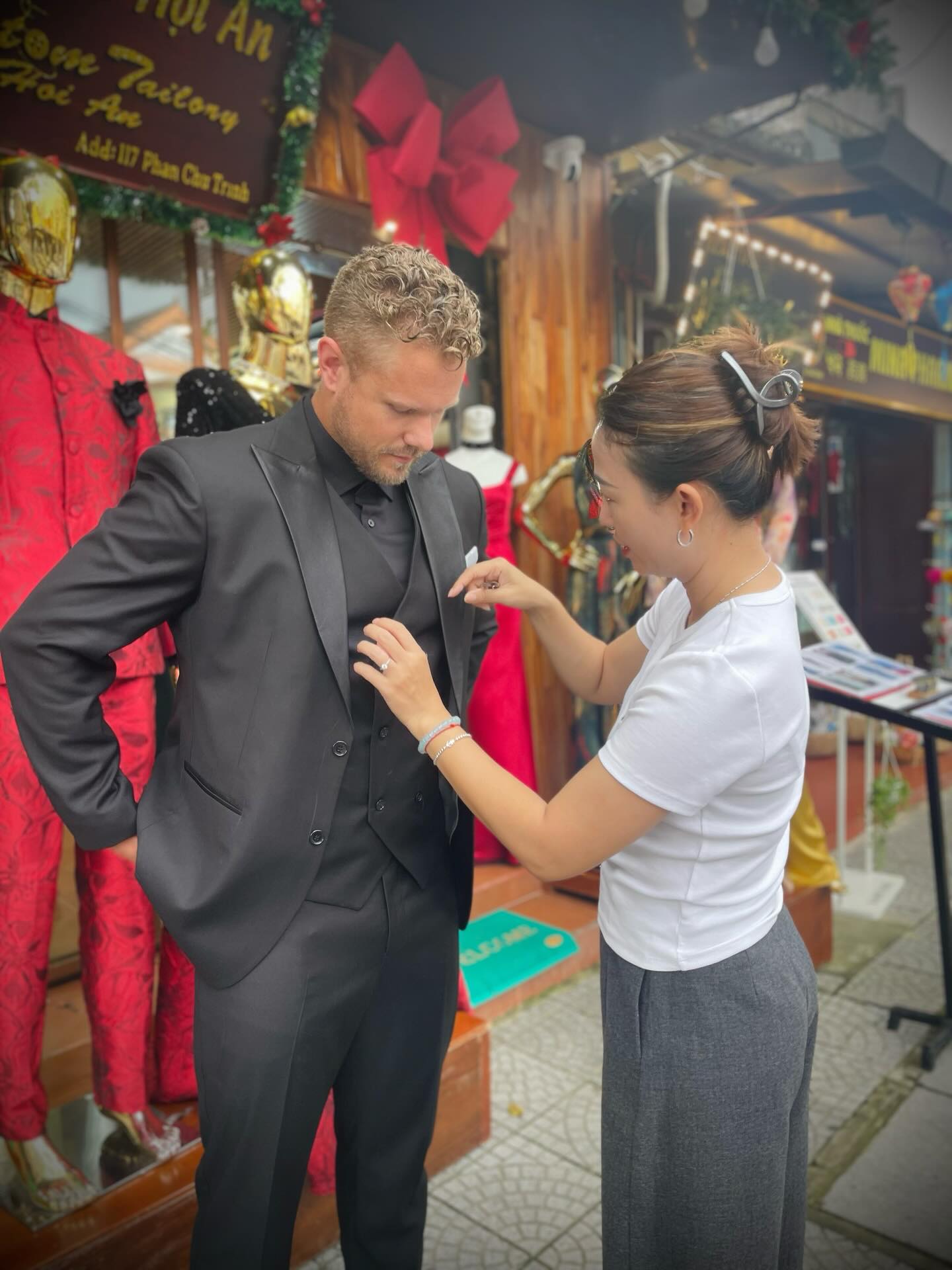
For suits, confirm lapel style, number of buttons, vent style, jacket length, and the level of structure. Some people want a softer structure for lighter movement, while others want a stronger structure for a sharper look in photos. Shoulder padding should also be confirmed because it changes the entire silhouette. Clear confirmation reduces major changes later.
Also confirm lining. Full lining often holds shape better but can feel warmer, while half lining is usually lighter for walking and hot weather. Chest and waist fit should match your wearing purpose. If you need to wear it all night, prioritize comfort rather than an overly tight fit. Correct choices help balance shape and ease.
5. Mistake 4 Skipping Fittings Or Doing A Quick Fitting For Hoi An Custom Clothing
Many people want early pickup and skip fittings. But fittings are when you discover issues at the shoulders, chest, armholes, seat, and trouser legs. These areas are hard to fix cleanly if you notice them late, especially if you need urgent pickup. Skipping fittings makes small problems more likely, and these issues often become annoying after hours of wear.
Fittings are also often done the wrong way. Many people only stand and look in the mirror, while issues appear when you sit, raise arms, walk, or put items into pockets. If you move a lot during your trip, these checks are essential. Proper fitting ensures the outfit matches real movement, not only a standing pose.
If your schedule is short, you can still do fittings effectively by ordering the steps and prioritizing the right adjustment points.
5.1. How To Schedule Fittings If You Have Only A Few Days For Hoi An Custom Clothing
Schedule the first fitting as early as possible after the basic shape is made. This fitting should focus on shoulders, chest, waist, and seat because these areas define the form. The next fitting should focus on sleeve length, shirt length, trouser length, and finishing details. This plan gives enough time for correct adjustments instead of rushed fixes.
Also keep buffer time before the day you will wear it. If you need the outfit for a fixed evening event, try to receive it at least one day earlier for minor fixes. If you have an early flight, pick up and re-check well before departure to handle unexpected issues. Buffer time reduces last-minute risk.
Besides scheduling, you need a fitting checklist to avoid missing problems.
5.2. A Fitting Checklist To Spot Issues On The Spot For Hoi An Custom Clothing
For shirts, try it with all buttons closed while breathing normally. Check whether the collar feels tight, whether armholes pinch when you raise your arms, and whether the back pulls when you sit. If you wear a watch, test the cuff closure to ensure it is not too tight. This checklist helps maintain comfort after hours of wear.
For trousers, try them with your intended shoes and walk a few steps. Check whether the hem falls correctly on the shoe, whether the legs twist while walking, and whether the crotch area pulls when sitting. If you often carry a phone in your pocket, test that as well to see if it distorts the shape. These checks help match real-life use.
👉🏻 Read more: Here!
6. Mistake 5 Misunderstanding The Timeline And Not Tracking Milestones For Hoi An Custom Clothing
Timing depends on garment type and complexity. Shirts often take fewer steps than blazers or suits. If you only ask “how long” without confirming measurement date, fitting dates, and final pickup date, delays can happen without warning. Tracking milestones keeps the process clear and on schedule.
Late design changes also increase risk. Changing the collar, changing the fit, or changing pocket details near the end can extend the timeline and create extra fixes. For travelers, late changes can remove your chance to re-fit. Confirming the plan early avoids rushed finishing.
You can reduce confusion by asking for specific milestones and writing down each appointment.
6.1. How To Ask About Timing Clearly For Hoi An Custom Clothing
Ask by milestones: Which day is the first fitting, which day is the second fitting, and which day is pickup. Ask how much time is needed between fittings so adjustments can be done properly. If you have tours scheduled, share your available time windows to set appointments smoothly. This keeps everything aligned with your travel plan.
Also clarify the conditions to meet the deadline. Ask whether you must attend all fittings or whether fittings can be combined. Ask whether the style can be confirmed on the first day or whether extra consultation is needed. When conditions are clear, the process is less likely to get stuck due to missing decisions.
If the timeline changes, you can still protect quality by prioritizing the right parts first.
6.2. How To Handle Schedule Changes While Keeping Fit For Hoi An Custom Clothing
Prioritize the hardest-to-fix areas if the schedule becomes tight. For shirts, prioritize shoulders, chest, and armholes. For trousers, prioritize seat, thighs, and crotch. Sleeve length and trouser length are often quicker to adjust at the end. Correct priorities help maintain fit quality without sacrificing comfort.
If you are about to leave, agree on a pickup and final adjustment plan. You can pick up a version that already fits well, then reserve time for minor tweaks on the last day. If delivery is needed, confirm packing to reduce wrinkles, especially for suits. Clear planning reduces problems after you leave.
7. Mistake 6 Unclear Pricing Items And Extra Costs For Hoi An Custom Clothing
Pricing can be quoted by item, by set, or based on fabric and structure. If you only ask for the total price without asking what is included, extra fees may appear such as lining fees, button fees, embroidery fees, rush fees, or design change fees. For suits, lining and structure level can affect the price clearly. Itemizing costs helps keep everything transparent from the beginning.
Extra costs can also happen if included alterations are not confirmed. Some places include basic fixes within a set time, while others charge per alteration. For travelers, this matters because you need to know whether alterations can be completed before you leave. Clear terms help you stay within budget and avoid disputes.
To confirm pricing clearly, you only need a minimum list of items to include in the quote.
7.1. A List Of Pricing Items To Include In A Quote For Hoi An Custom Clothing
The quote should list each garment: shirt, trousers, blazer, or suit. Each item should clearly state fabric type, whether lining is included, and any add-ons such as special buttons or embroidery. For trousers, specify waistband style, pleats, hem, and pocket type. This list prevents quotes from being vague or incomplete.
For suits, add structure details to the quote. Confirm lining type, structure level, whether there is shoulder padding, and whether rush fees apply. If design change fees exist, ask for the conditions that trigger them. When everything is written clearly, there are fewer surprises at the final stage.
After you have the quote, compare it with your real needs to avoid paying for items you do not need.
7.2. How To Compare The Quote With Your Needs For Hoi An Custom Clothing
If you only need clothing for a few photos, focus on a neat form and fabric that looks good on camera, without needing heavy structure. If you order clothing for daily work, prioritize durable fabric, less wrinkling, and strong stitching rather than decorative details. When needs are clear, you can choose the right items and reduce extra costs.
For groups, set a budget early so consultation and decisions are faster. If you want matching colors for photos, choose easy-to-pair tones and check them in natural light. Also consider how many garments you truly need within the available fitting time. Comparing carefully helps the final result look good while staying within budget.
8. Mistake 7 Not Asking About Alteration Policy And Travel Care For Hoi An Custom Clothing
Even if it feels fine during fitting, after long wear, sitting, or walking, you may notice small areas that need adjustment. If you do not ask about alteration policy, you may not have time to return for fixes. Travelers also often face wrinkles from packing, especially with shirts and suits. Asking in advance gives you a clearer plan.
Proper care also matters for keeping shape. Trousers with creases can lose the crease if folded wrong, and shirt collars can be damaged if crushed. If you fly or travel long distances, packing becomes even more important. With correct care, the outfit will keep its shape better after you take it home.
To avoid risks after pickup, ask about alteration policy and follow simple travel care steps.
8.1. Questions To Ask About Alterations After Pickup For Hoi An Custom Clothing
Confirm how long free alterations are available and how many adjustments are included. Confirm which fixes are covered such as taking in the waist, letting out the waist, adjusting sleeve length, and hemming trousers. If you leave early, ask what support is available if you notice issues later. Clear policy helps you feel safer to wear the outfit.
Also ask about seam allowance. For trousers and shirts, reasonable seam allowance allows small let-out or take-in adjustments if your body changes. Ask how to handle mild shrinkage after the first wash. Knowing these points helps you stay in control during long-term use.
After you confirm alteration policy, the final step is packing correctly.
8.2. How To Fold, Hang, And Travel To Reduce Wrinkles For Hoi An Custom Clothing
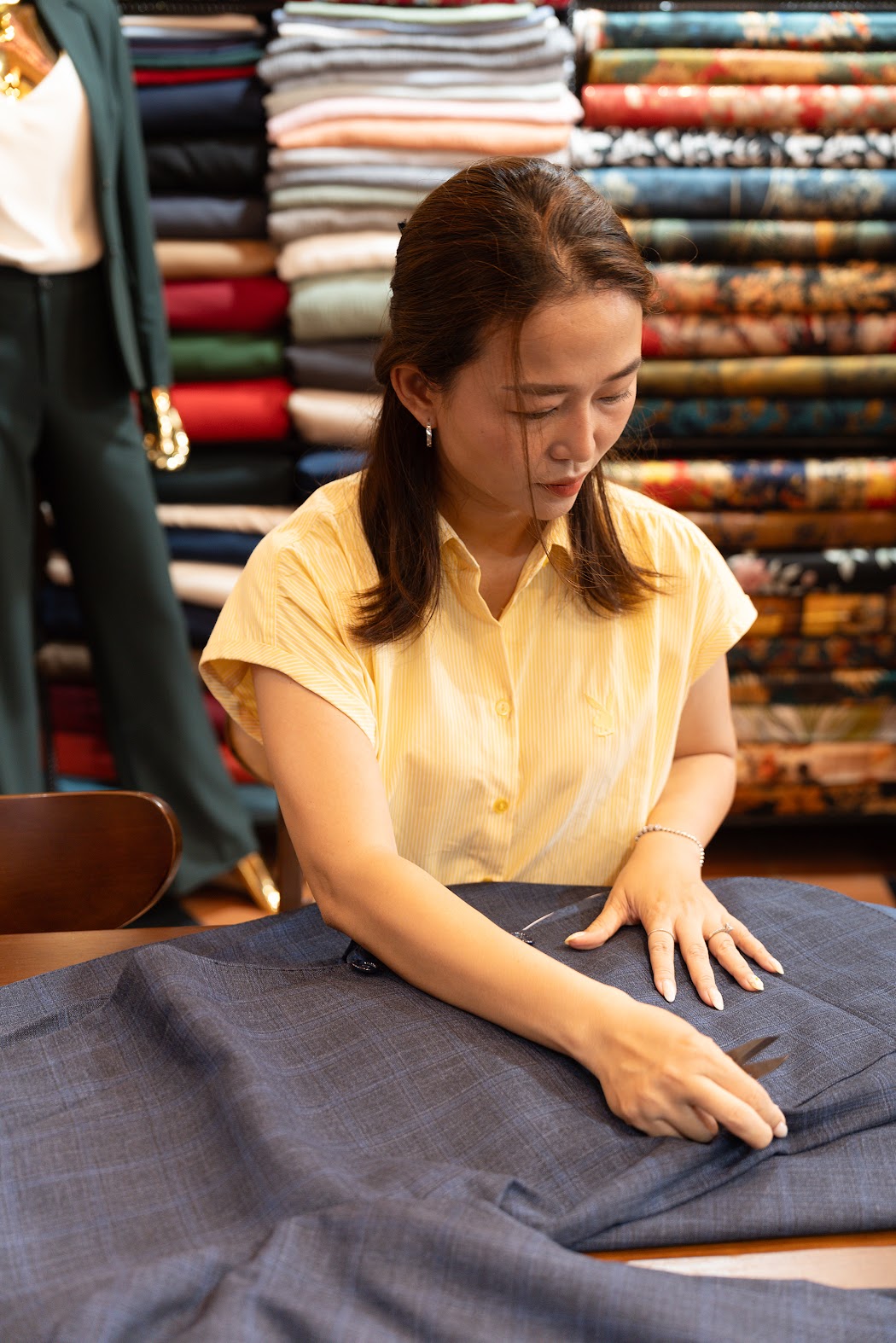
Fold shirts along the shoulder line and place the collar where it will not be crushed. If you have a garment bag, use it and place the shirt near the top of your suitcase. Fold trousers along the crease line to keep the crease and avoid twisting the legs. Correct folding reduces wrinkles and makes ironing easier.
Blazers or suits should be hung when a wardrobe is available. If you must fold, fold in a way that protects the lapel from sharp creases and avoid placing heavy items on the shoulders. When you arrive, hang the jacket in a ventilated place for a while so the fabric relaxes naturally. Correct care helps keep shape throughout your trip.
Conclusion
Hoi An custom clothing will have a better fit when you control these 7 points: choose fabric by purpose, measure with natural posture, confirm style clearly, do fittings properly, track timeline milestones, confirm itemized pricing, and ask about alteration policy with travel care. When done correctly, the outfit fits better, wrinkles less, and reduces urgent last-minute fixes. If you still have questions or need advice, contact Custom Tailory Hội An for guidance based on your needs and schedule.
📍 Address: 117 Phan Chu Trinh, Hoi An, Da Nang – Google Map
📞 Hotline: 0901 529 953
🌐 Fanpage: Customtailory Hoi An
🌐 Website: https://www.customtailoryhoian.com/