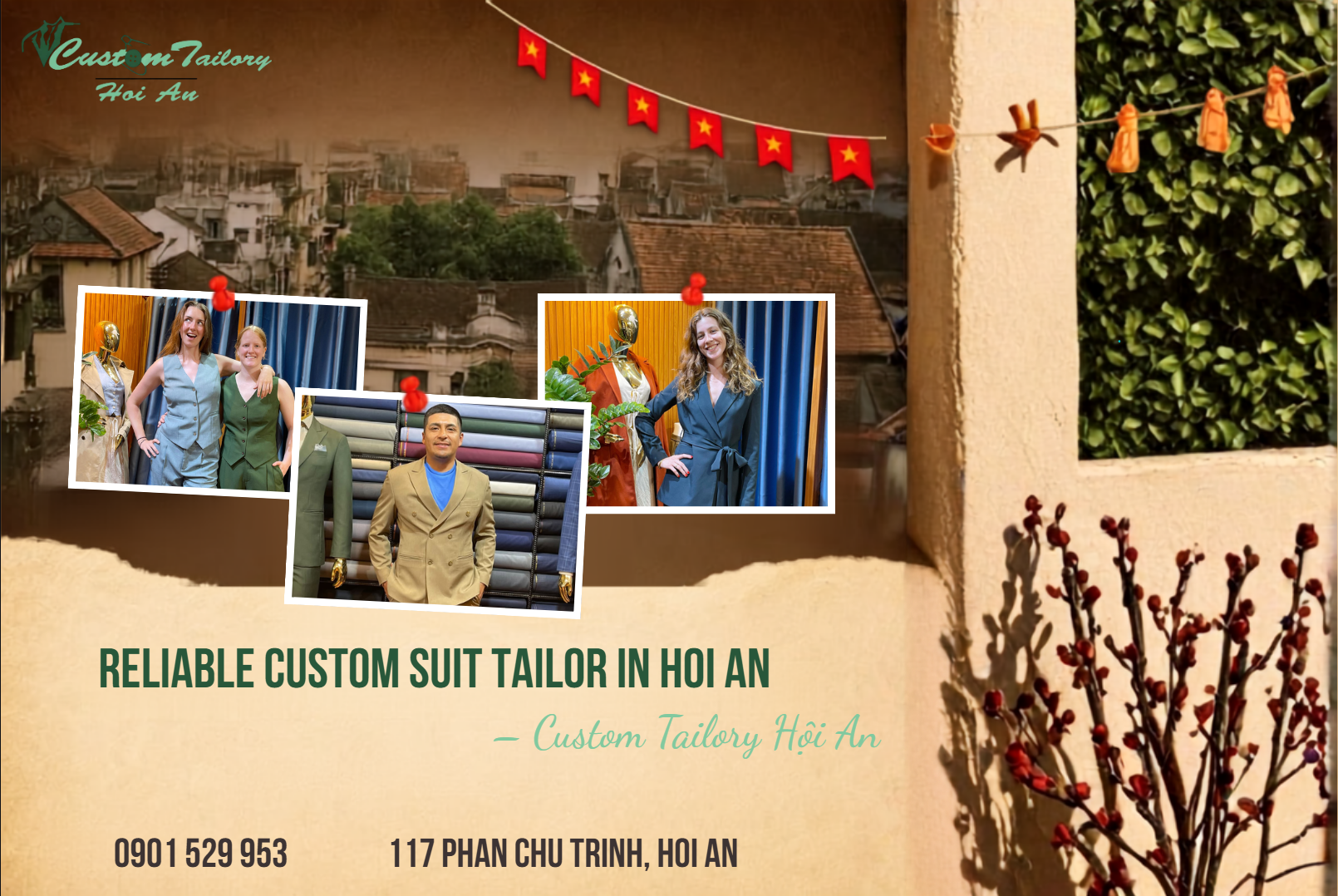
Many travelers pick a Hoi An suit tailor because they can measure, fit, and adjust within a short stay. This post explains why tailoring is so common in the old town, what a normal suit timeline looks like, and what changes the final price. You will also get a checklist to compare samples, confirm fabric codes, and plan fittings without rushing. It also covers common issues like unclear quotes and late design changes. In this article, Custom Tailory Hội An will explain each step clearly.
1. Why Tailoring In Hoi An Is So Popular

A Hoi An suit tailor fits travel plans because you can start early, do a fitting soon after, and still have time for corrections before you leave. That matters when you only have a few days and cannot return later. Many shops target tourists and advertise fast timelines, but the safest result still depends on at least one real fitting, not only a quick measurement. When you plan properly, a Hoi An suit tailor can deliver a suit that feels correct when you walk, sit, and move, not just when you stand still.
A Hoi An suit tailor is also popular because you can choose details and shape from the start. Instead of accepting standard sizes, you can adjust shoulders, waist, sleeve length, jacket length, and trouser length to match your body and your comfort level. This matters for first-timers because small differences in posture, shoulder slope, or arm position can change how a suit looks. A Hoi An suit tailor can spot these issues during fittings and correct them step by step, which is difficult to do with ready-to-wear items.
The popularity makes more sense when you focus on practical reasons, not marketing words. A becomes a good option when the shop can explain the workflow, confirm what is included, and set a fitting schedule that you can actually follow. The points below show what drives demand and how to use that demand to your advantage when you choose.
1.1. Short Stays Need A Clear Timeline
If you visit for 2 to 5 days, choose a Hoi An suit tailor that can state the timeline in writing: consultation time, measurement time, first fitting time, adjustment time, and pickup time. A written plan reduces misunderstandings and helps you compare shops fairly, because you can see which Hoi An suit tailor can support your schedule without skipping important steps. If a shop only says “fast” but does not confirm a fitting time, it is harder to trust the final result.
Even a fast Hoi An suit tailor still needs time for balance fixes after the first try-on. Shoulder balance, sleeve pitch, and jacket length often look different after you put the garment on. A realistic plan reduces last-minute pressure and lowers the chance of mistakes. To protect your time, visit a Hoi An suit tailor on day 1, schedule the first fitting as early as possible, and keep the last day for final checking. This structure gives a Hoi An suit tailor the room to adjust correctly instead of rushing the last steps.
1.2.Tourists Prefer Simple Custom Options
A Hoi An suit tailor lets you pick lapels, pockets, vents, button count, lining, and the level of structure. These choices help you match the suit to business, events, or photos, and they also affect comfort in warm weather. For example, a lighter structure and a breathable lining can feel better when you wear the suit for long hours. A Hoi An suit tailor can explain these options in simple terms so you can choose based on use, not guesswork.
During fittings, give clear feedback like “tight when I sit” or “pulling when I raise my arms.” This helps a Hoi An suit tailor adjust the right area instead of guessing. Also ask the Hoi An suit tailor to repeat your key choices in writing, especially lapel type, pocket style, and vents. When the order note is clear, a Hoi An suit tailor can deliver what you agreed, even if more than one person works on your suit.
2. What The Process Usually Looks Like
A Hoi An suit tailor normally follows a repeatable order: consult, measure, confirm design, choose fabric, record details, cut, sew, first fitting, adjust, final fitting, and delivery. This structure matters because each step depends on the previous one. If the design changes after cutting, the result can shift and the adjustments become harder. A reliable Hoi An suit tailor will therefore push you to confirm the design before cutting, then focus on fit during fittings.
For first-timers, the safest habit is to keep one written order note. When you and the Hoi An suit tailor reference the same note, you reduce confusion across fittings. Your note should include fabric code, color, lapel style, pockets, vents, button count, lining choice, and the promised pickup date. If you want a specific fit style, add one line like “slim but comfortable when sitting” so the Hoi An suit tailor understands your priority.
The steps below show what you should confirm at each stage. They are simple, but they prevent most first-time problems. If you follow them, a Hoi An suit tailor can work faster without losing accuracy, because the requirements stay stable.
2.1. Consultation And Written Order Note
In the first visit, tell the Hoi An suit tailor the purpose of the suit and what shoes you will wear. Shoe height changes trouser hem, so this detail should be fixed early. If you plan to wear the suit with loafers, dress shoes, or boots, say so. A Hoi An suit tailor can set the trouser break differently depending on your footwear and your style preference.
Ask the Hoi An suit tailor to write the fabric code, color, lapel style, pocket style, vents, buttons, lining choice, and the promised pickup date. Also ask what is included in the quoted price, such as number of fittings and standard adjustments. A transparent Hoi An suit tailor will answer directly and confirm the next appointment time. If the shop avoids written details, it is harder for a Hoi An suit tailor to deliver consistently, because the process relies on accurate notes.
2.2. First Fitting Checks
At the first fitting, check shoulders first because they are hardest to change. Look for shoulder symmetry and whether the jacket sits flat without pulling. Then check chest comfort, waist position, sleeve balance, jacket length, and trouser break. A Hoi An suit tailor should guide you through this check, but you should still test movement, because a suit that looks fine standing can feel tight when sitting.
Move normally during the fitting. If anything pulls when you walk or sit, tell exactly when it happens so the correction targets the cause. For example, say “pulling across the back when I reach forward” or “tight at the seat when I sit down.” This level of detail helps a Hoi An suit tailor adjust pattern balance rather than only widening one area. After feedback, ask the Hoi An suit tailor to repeat the changes back to you and confirm the next fitting time.
2.3. Final Fitting And Pickup
Before you pay the balance, do a final try-on and match every item to your order note. Check lapels, pockets, vents, buttons, lining, sleeve length, jacket length, trouser length, and comfort. A reliable Hoi An suit tailor will let you check details before the final press, because pressing can hide small problems until you wear the suit again.
If something is off, ask for the fix before you leave. Small corrections are easiest when the Hoi An suit tailor still has the pattern and notes ready. Also confirm packing advice for travel, such as folding method or using a suit bag, so your suit stays in good condition. When the final check is done carefully, a Hoi An suit tailor can deliver a suit that feels correct and looks consistent with your original request.
3. What Makes Prices Vary
Suit tailoring prices change mainly because of fabric, structure, inside finishing, and fitting time. Two suits can look similar at first glance but cost different amounts because the internal work, the number of checks, and the time spent on corrections are not the same. A Hoi An suit tailor may offer a low headline price, but the real value depends on what is included and how the shop handles fitting and rework.
To compare fairly, ask what is included in the quote and request a simple written breakdown. A transparent Hoi An suit tailor can explain what changes price, such as fabric type, lining choice, structure level, finishing details, and any rush fee. If the shop cannot explain the quote clearly, you may face unexpected costs later, even if the Hoi An suit tailor seems friendly at the start.
Use the breakdown below to compare quotes without guessing. If you ask the same questions at each shop, it becomes easier to see which Hoi An suit tailor is pricing based on real materials and process, and which one is pricing based on vague promises.
3.1. Fabric Content And Weight
Ask the Hoi An suit tailor what the fabric is and whether it has stretch. Confirm if it is wool, a wool blend, cotton, linen, or a mixed fabric, and ask about weight and drape. For warm weather, many visitors choose breathable options such as linen, cotton, or lightweight blends, depending on the formality needed and how often the suit will be worn. A Hoi An suit tailor should explain these differences in simple terms, not only push the most expensive option.
To avoid confusion, write down the fabric code or take a photo of it, then confirm it in your order note. This keeps the Hoi An suit tailor aligned with your selection from the first day to pickup. If the shop offers multiple fabric grades, ask the Hoi An suit tailor to show two options: one within your budget and one step higher, so you understand what you are paying for and what you get in return.
Also ask about care requirements. A Hoi An suit tailor should tell you if the fabric is likely to wrinkle, whether it may shrink after washing, and whether dry cleaning is recommended. When you match fabric to climate and use, you reduce the chance of disappointment and make better decisions with the Hoi An suit tailor.
3.2. Structure And Finishing Level
Structure affects how the jacket holds shape, especially in the chest and shoulders. A good Hoi An suit tailor should explain the structure level in simple terms, such as how much support is used in the chest, how the shoulders are built, and what lining choice is used. Avoid vague claims like “best quality” without clear details. A Hoi An suit tailor who can describe the structure clearly is usually more consistent in results.
Also inspect sample garments inside. Ask the Hoi An suit tailor to show the inside seams, buttonholes, and lining attachment. Clean seams, neat buttonholes, and tidy lining edges are signs of careful work. If the inside looks rushed, the outside may still look fine at pickup, but wear and durability can suffer. This is why a Hoi An suit tailor with strong inside finishing can justify a higher price.
If you want a sharper silhouette, ask what that requires and how it affects comfort. A Hoi An suit tailor may recommend more structure for a formal look, but you should confirm that the suit still feels comfortable when sitting and moving. This is also where fitting time matters, because a structured jacket often needs more careful adjustment by the Hoi An suit tailor.
Read more: https://customtailoryhoian.com/custom-tailor-hoi-an-how-identify-qualiy/
3.3. Rush Timing And Late Changes
If you need fast service, confirm the rush rule before you pay. A Hoi An suit tailor may accept rush orders for simpler suits, but heavy structure, complex design details, and extra changes take more time. Ask the shop to define what counts as “rush,” what the extra fee is, and what the trade-offs are. A reliable Hoi An suit tailor will explain what can be done within your schedule and what should not be rushed.
To reduce risk, lock the design before cutting. Late changes like switching lapels, changing pocket style, adding vents, or changing the jacket length can force rework and reduce accuracy. When you keep design stable, the Hoi An suit tailor can spend time on fit instead of rebuilding decisions. If you must change something, ask the Hoi An suit tailor to confirm the cost and whether the change affects the delivery time.
Finally, confirm how many fittings you will get. A rush plan with zero real fitting is risky. A Hoi An suit tailor can work quickly, but you still need at least one fitting to check shoulder balance and basic comfort before final finishing.
4. How To Screen Shops Quickly
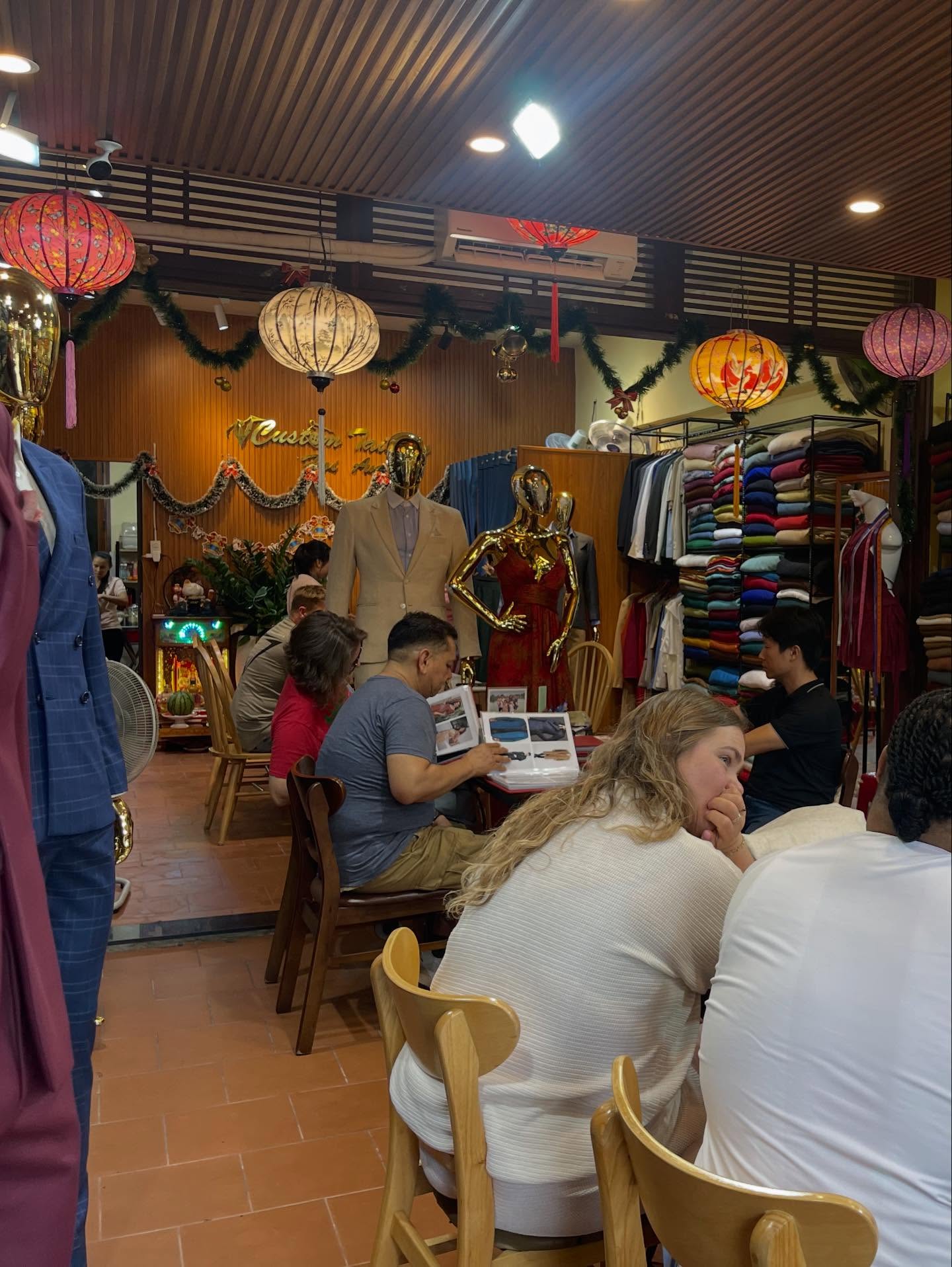
Start with convenience. This is only practical if you can revisit the shop for fittings without losing too much time. A Hoi An suit tailor can only correct issues if you show up for the fitting plan. If a shop is far from your accommodation, you may skip a fitting, and even a skilled Hoi An suit tailor cannot guarantee the final result without checks.
Then check evidence. A good Hoi An suit tailor can show real samples, explain the workflow, and answer pricing questions clearly. You do not need perfect English, but you do need clear answers, written notes, and a workable schedule. Use the steps below to shortlist and test shops in person so you can choose a Hoi An suit tailor with proven consistency.
4.1. Review Patterns And Location
Read recent reviews and look for patterns: fit accuracy, on-time delivery, and how problems were handled. Add a Hoi An suit tailor to your list only when comments are consistent on these points, not only “nice staff” or “good price.” Pay attention to repeated issues like missing deadlines, fabric swaps, or unclear quotes. These are practical risks when choosing a Hoi An suit tailor for a short trip.
Also prioritize distance. If the shop is close to your hotel, it is easier to keep the fitting plan that a Hoi An suit tailor needs. A close location also makes it easier to stop by for a quick re-check if the sleeve length or trouser hem needs a small correction. This is why the “best” Hoi An suit tailor for you is often the one you can revisit easily, not only the one with the highest rating.
4.2. Ten-Minute Walk-In Test
Ask the same questions in each shop: how many fittings are included, what changes cost extra, and when the first fitting can happen. A reliable Hoi An suit tailor will answer directly and will not avoid details. Also ask whether they will write the timeline and fabric code on the order note. If a Hoi An suit tailor refuses to provide a written plan, it is harder to manage risk.
Ask to see a finished jacket and trousers in person, not only photos. Check your size range if possible, because fit issues are easier to spot when the sample is close to your proportions. If sample quality is weak, that Hoi An suit tailor is unlikely to deliver better work for your order. If the staff push you to pay immediately without showing evidence, treat that as a warning sign and move to the next Hoi An suit tailor.
4.3. Simple Sample Checklist
Check symmetry, stitching lines, and inside seams. For jackets, check collar and lapels, and look for clean alignment and a smooth lay of the front panels. For trousers, check waistband finishing, the zipper area, and the straightness of side seams. A Hoi An suit tailor who does clean basic work usually also handles adjustments more reliably.
If you see uneven seams or loose threads, treat it as the normal standard of that Hoi An suit tailor, not a rare exception. Also check buttonholes and pocket corners, because these areas show workmanship quickly. If the shop claims high quality, ask the Hoi An suit tailor to explain what they do to control quality before pickup. Clear answers and consistent samples are the fastest way to shortlist a Hoi An suit tailor you can trust.
5. A Simple Timeline For A Short Trip
A short plan works best when you treat each visit as a checkpoint. With a Hoi An suit tailor, the goal is enough time for at least one full fitting and one correction round.
If possible, plan day 1 for consultation, day 2 for first fitting, and day 3 for final check and pickup. This gives time to correct issues found at the fitting. Use the guide below to keep things on track.
5.1. Day 1: Confirm Design And Fabric
On day 1, choose fabric, confirm design details, and ask the Hoi An suit tailor to record everything in writing. In peak season, booking 1 to 2 days ahead can help you secure a fitting slot.
Make sure the note includes fabric code, lining, pockets, vents, buttons, and the pickup time. Before leaving, confirm the first fitting time. A Hoi An suit tailor that schedules fittings early gives you more room for adjustments.
5.2. Day 2: First Fitting And Adjustments
At the fitting, check shoulders, chest comfort, waist, sleeve balance, jacket length, and trouser length. Then walk and sit to test movement.
If you change shoes, tell the Hoi An suit tailor immediately so the trouser hem can be set correctly.
5.3. Day 3: Final Check And Packing
Do the final try-on before pressing, then approve the final press only after everything matches your note. A good Hoi An suit tailor will not skip this step.
For travel, ask the shop how to fold the suit to reduce wrinkles in your suitcase.
Read more: https://customtailoryhoian.com/
Conclusion
A Hoi An suit tailor is popular because travelers can get a suit fitted within a short schedule when the process includes written records and real fittings. Choose a shop that shows clean samples, explains price drivers, and confirms fabric codes and fitting times in writing. Visit on day 1 so there is time for adjustments, and do a final try-on before paying the balance. If you still have questions or need advice, contact Custom Tailory Hội An to get clear guidance for your trip. Share your travel dates and suit purpose for faster support.
📍 Address: 117 Phan Chu Trinh, Hoi An, Da Nang – Google Map
📞 Hotline: 0901 529 953
🌐 Fanpage: Customtailory Hội An
🌐 Website: https://www.customtailoryhoian.com/