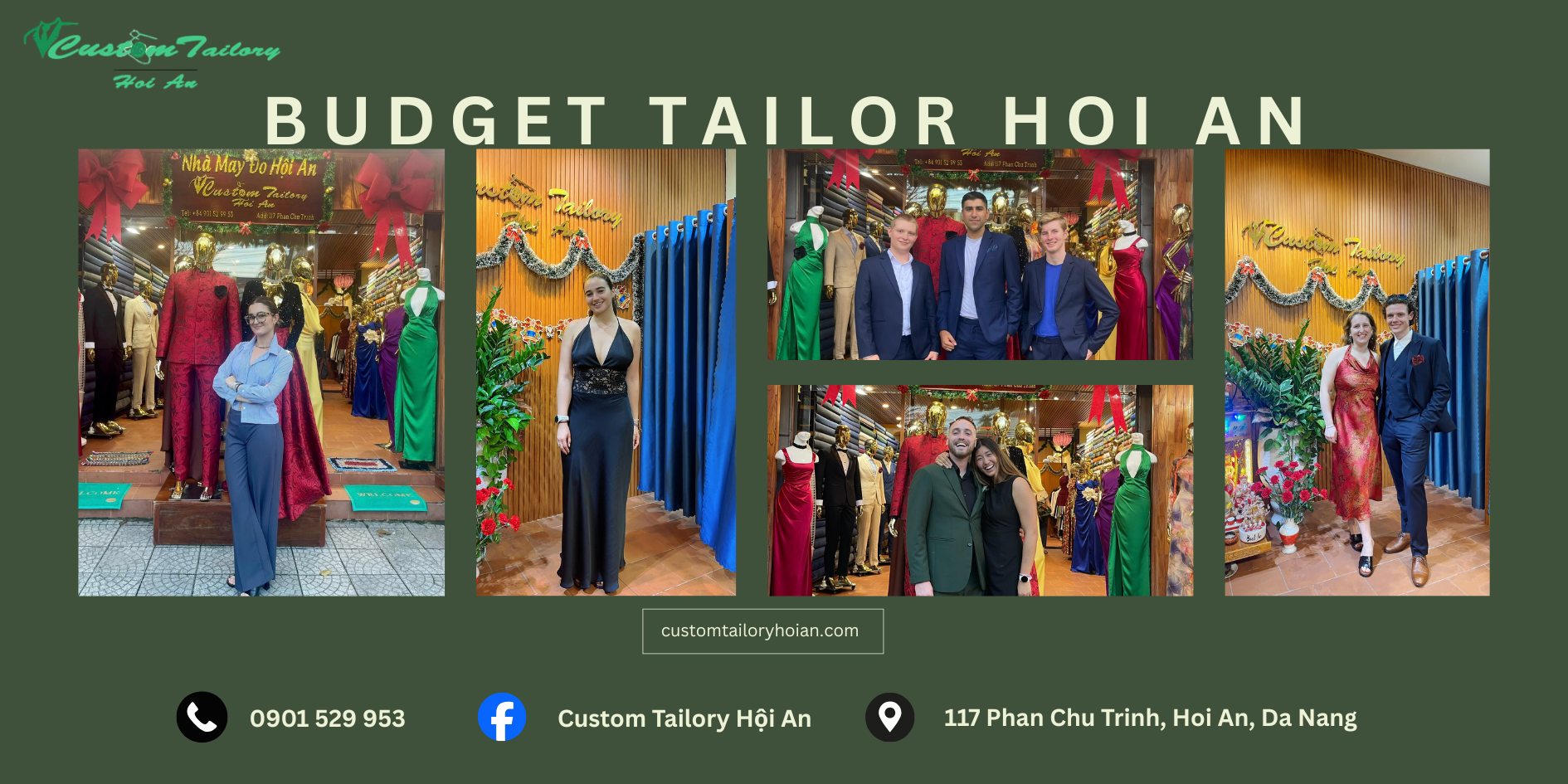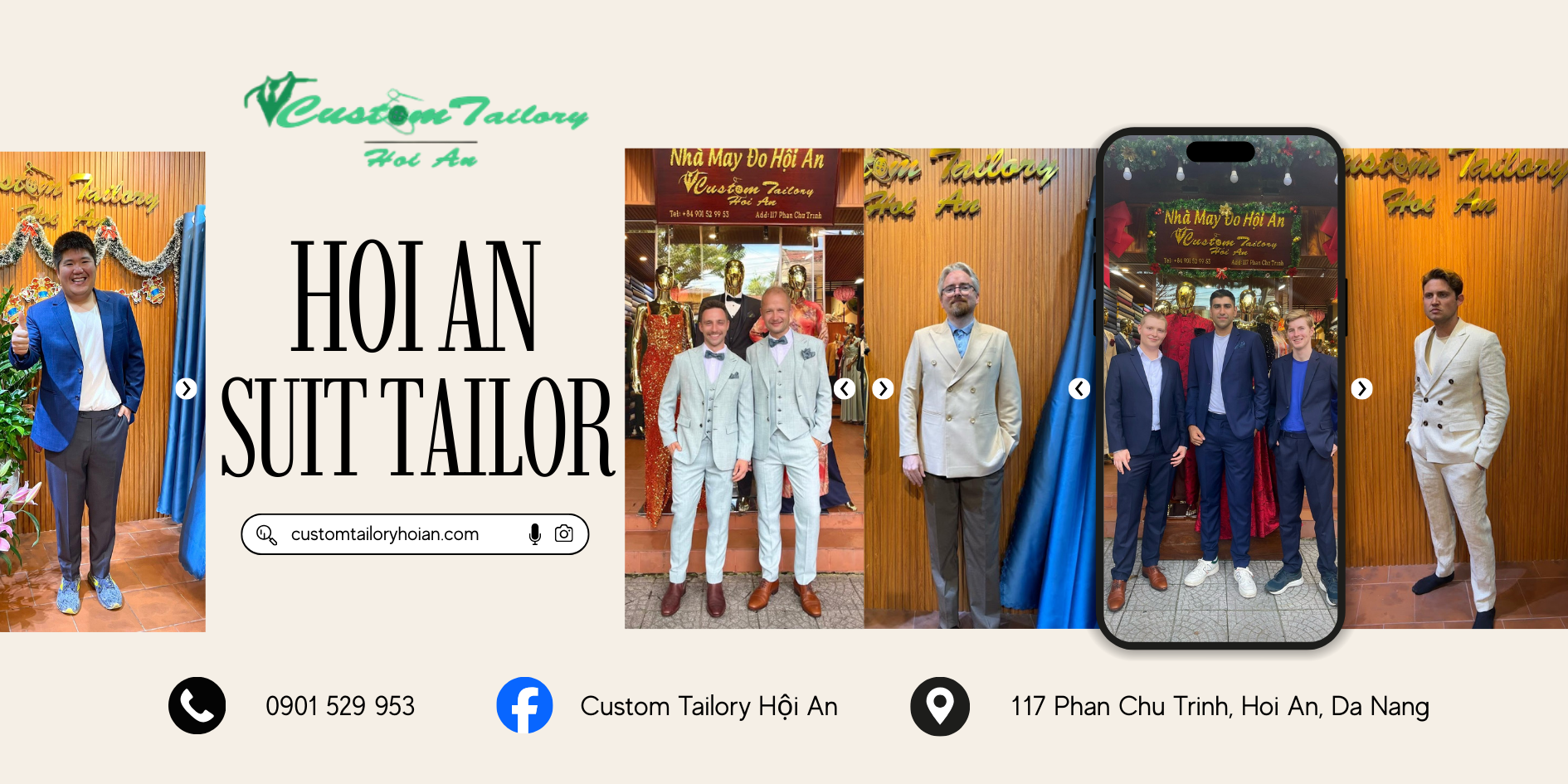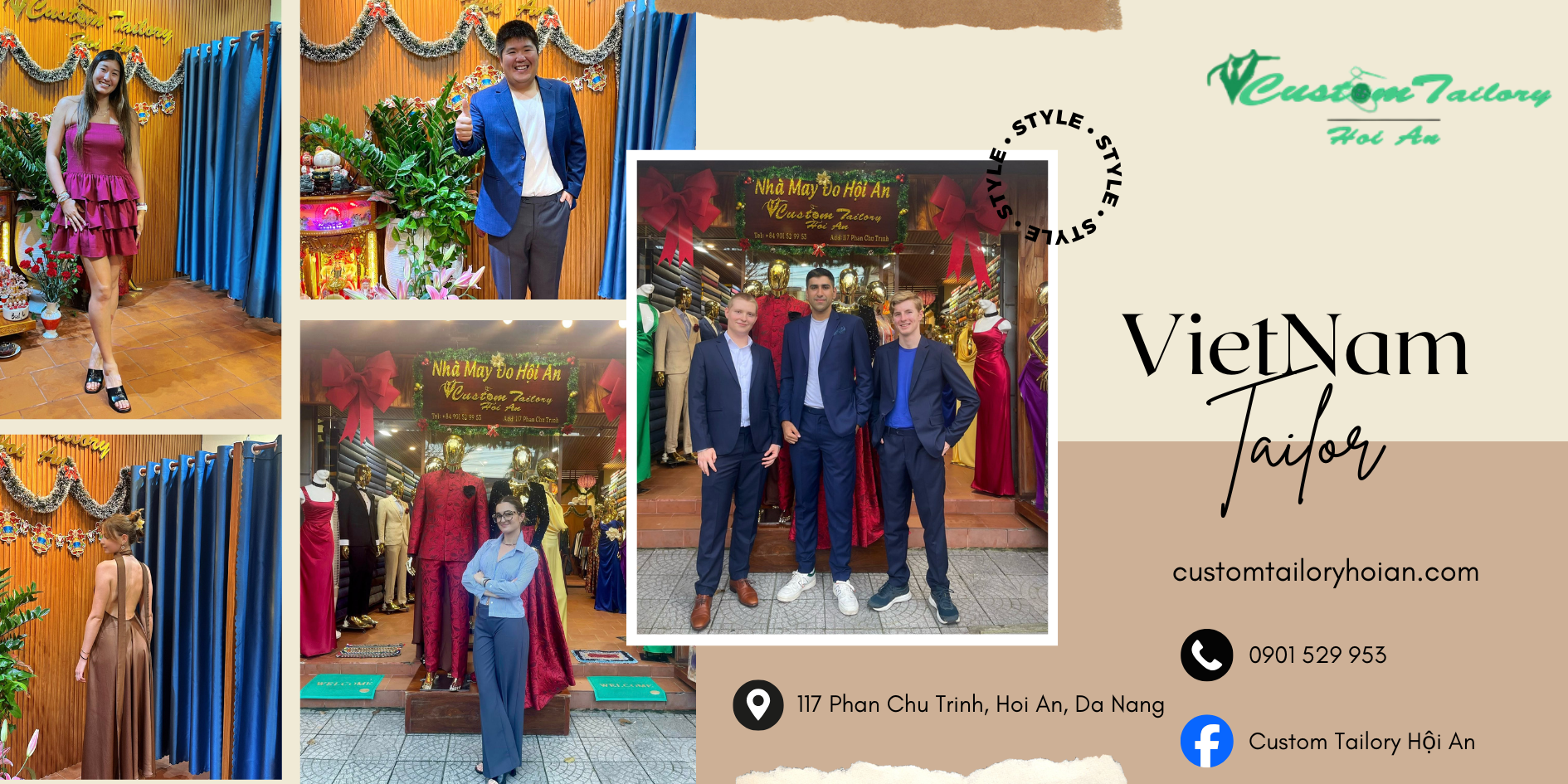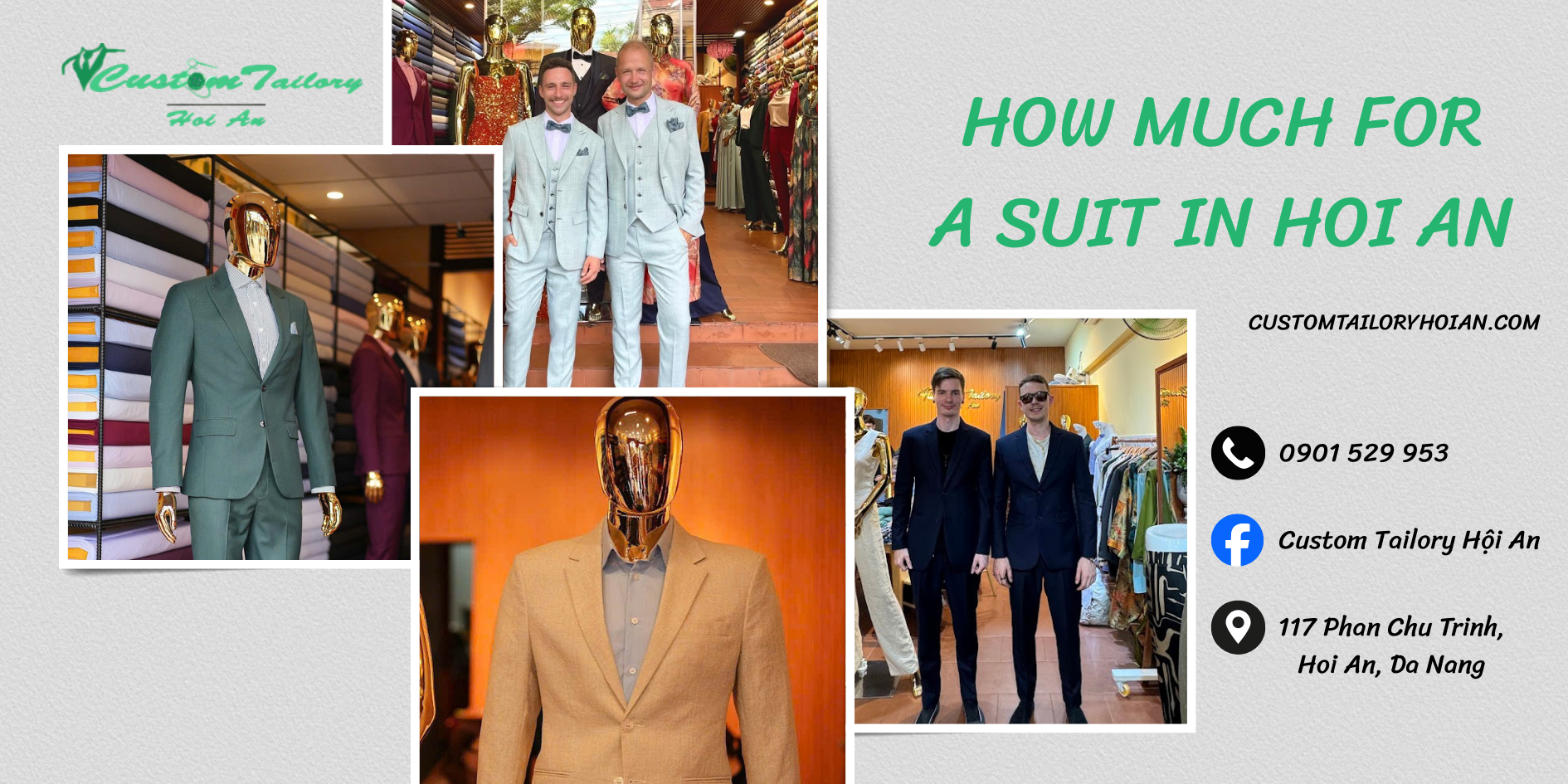
Hoi An has long been known as Vietnam’s “tailoring paradise” — a place where any traveler can own a well-fitted, sharp, and personalized suit within just 24 hours. But the most important question everyone asks when planning a tailoring experience here is: “How Much for a Suit in Hoi An?”
Suit prices in Hoi An are not fixed because they depend on fabric, design complexity, completion time, tailor skills, and customization services.
In this in-depth guide, you will learn how to estimate suit costs in Hoi An, understand what price ranges mean, choose a reputable tailor shop, and optimize your budget while still owning a truly premium suit.
1. Why is the question “How Much for a Suit in Hoi An” so important?
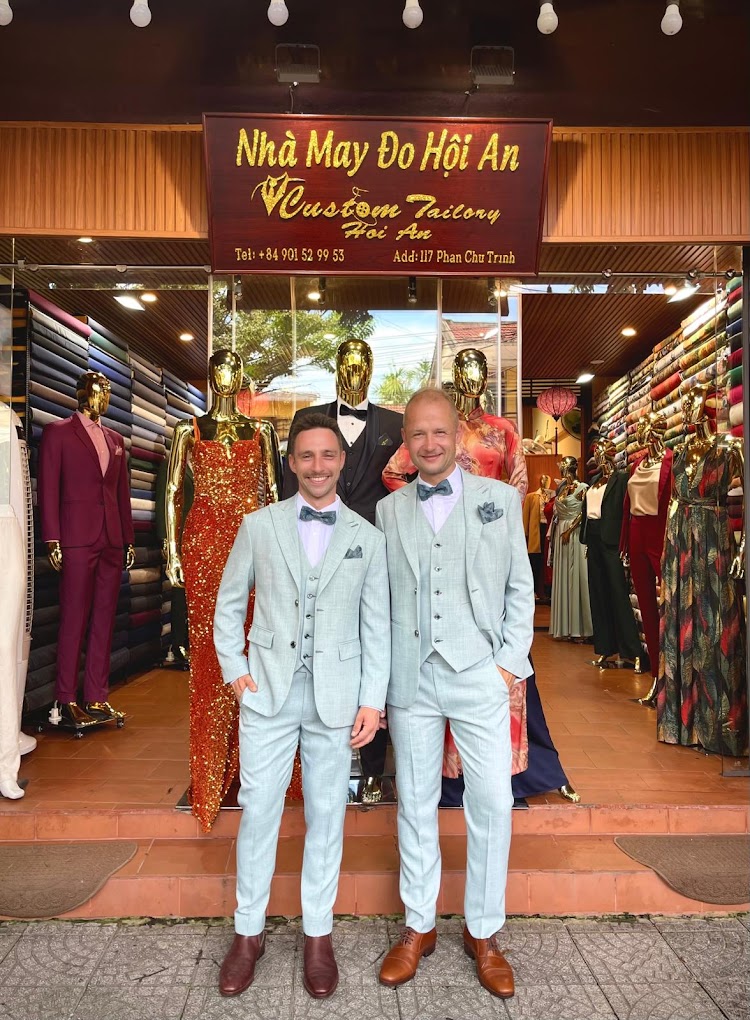
Although Hoi An is famous for high-quality tailoring at reasonable prices, the actual cost can vary widely — from a few million VND to over ten million. Asking How Much for a Suit in Hoi An helps travelers:
-
Plan their budget before arriving in Hoi An
-
Choose the right tailor shop that fits their finances
-
Understand the real value behind each price level
-
Avoid “cheap but low quality” or “overpriced quotes”
-
Gain clarity on how fabric, skill, and production time influence cost
In other words, understanding How Much for a Suit in Hoi An helps you make smarter decisions and maximize your personalized tailoring experience in the ancient town.
2. Overview of Suit Costs in Hoi An – Explained from A to Z
2.1. Suit prices in Hoi An depend on multiple factors
When you step into a tailor shop in Hoi An, the first question you will usually hear is not “Which suit style do you want?” but “Which fabric would you like to choose?”
Fabric makes up 50–70% of the total cost of a suit. Besides fabric, design complexity, construction technique, completion time, and customization all contribute to the final price.
All these elements combine to determine the exact answer to: How Much for a Suit in Hoi An?
2.2. Price ranges vary from affordable to luxury
Every tailor shop in Hoi An has its own pricing structure, but most fall into three categories:
-
Affordable: Basic fabrics like polyester or cotton blends — ideal for occasional use
-
Mid-range: Fabrics with natural wool content — better drape, breathability, durability
-
High-end: Wool 80–100%, premium linen, or imported fabrics from Italy/England — luxurious feel and long-lasting structure
This is why when you ask How Much for a Suit in Hoi An, many tailors reply with another question:
“Which fabric grade would you like?”
2.3. Fabric is the biggest factor influencing price
Suit prices in Hoi An change primarily based on fabric:
-
Polyester → most affordable
-
Cotton blends → moderate quality + low cost
-
Wool blends → better drape, comfort, elegance
-
Wool 100% & high-grade linen → premium, luxurious, durable
These differences can change the answer to How Much for a Suit in Hoi An by several million VND. Just switching fabric can completely shift your budget.
2.4. Style and complexity also influence price
Besides fabric, design complexity matters:
-
Single-breasted suits → simpler, cheaper
-
Double-breasted suits → more structure, higher skill required
-
Canvas construction → half canvas or full canvas increases price
Canvas suits require more craftsmanship and time, which explains the higher cost.
This is why high-end suits always have higher answers to the question How Much for a Suit in Hoi An.
2.5. Tailor skill level affects the final cost
Hoi An has hundreds of tailor shops, but skills vary greatly:
-
Shops with highly skilled, well-trained tailors → higher price
-
Small shops or mass-production shops → lower price
Higher skill → longer production time → more careful process → higher cost.
This is a key factor when researching How Much for a Suit in Hoi An, because each shop’s standards differ significantly.
2.6. Completion speed directly affects the cost
Hoi An is famous for extremely fast tailoring: 6 hours, 12 hours, or 24 hours. But the faster you want it, the more you pay. A suit finished in 2–3 days costs less than a same-day rush order because the shop must prioritize your suit or allocate more labor.
If you ask How Much for a Suit in Hoi An during a rush request, expect a 20–50% price increase.
2.7. Customization services also increase overall value
Many customers want their suit to be unique through options like:
-
Special linings
-
Premium buttons
-
Embroidery of initials or names
-
Form adjustments based on posture
These upgrades increase cost but add strong personalization value — explaining why people receive different quotes for the same question: How Much for a Suit in Hoi An.
3. Fabric – The Biggest Factor That Determines How Much for a Suit in Hoi An
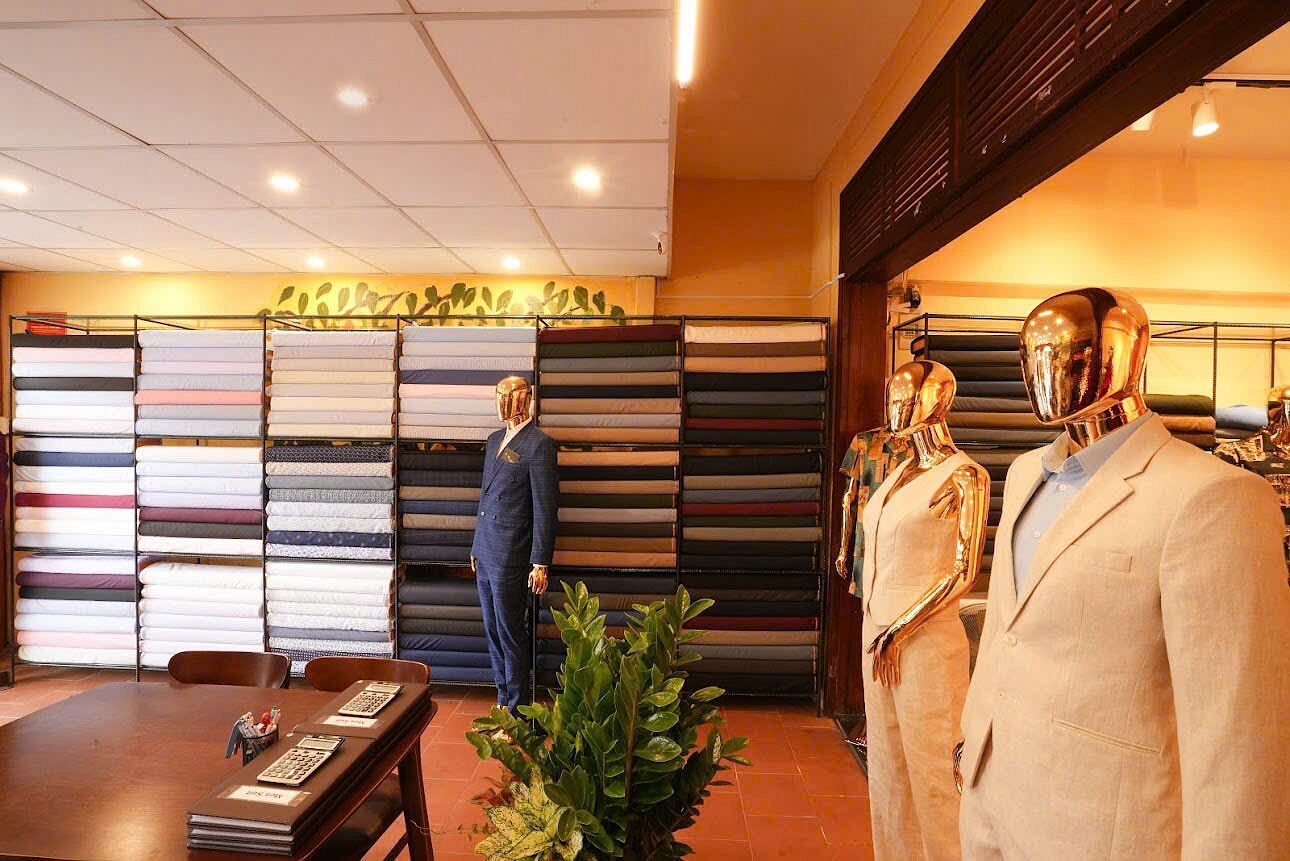
If you ask any tailor in Hoi An, “What influences the price the most?”, they will reply instantly: fabric.
Here’s how fabric determines How Much for a Suit in Hoi An:
3.1. Polyester & cotton blends (affordable range)
Price: 2,500,000 – 4,500,000 VND/suit
Ideal for: Quick tailoring, occasional wear
Characteristics:
-
Easy to shape
-
Many colors
-
Good durability but less breathable
This is the most common answer to How Much for a Suit in Hoi An for budget-focused travelers.
3.2. Wool blends (mid-range to high-end)
Price: 5,000,000 – 12,000,000 VND/suit
Ideal for:
-
Workwear
-
Wedding photos
-
Formal events
Characteristics:
-
Excellent elasticity
-
Breathability
-
Elegant drape and clean form
For long-term use, the answer to How Much for a Suit in Hoi An mostly falls within this range.
3.3. 100% wool – linen – cashmere (premium range)
Price: 10,000,000 – 20,000,000+ VND/suit
Ideal for: Fashion lovers, business professionals, high-expectation clients
Characteristics:
-
Superior breathability
-
Luxurious look
-
Soft, smooth, European-style appearance
If you’re exploring the luxury end of How Much for a Suit in Hoi An, this is the category to consider.
4. How Style Influences How Much for a Suit in Hoi An
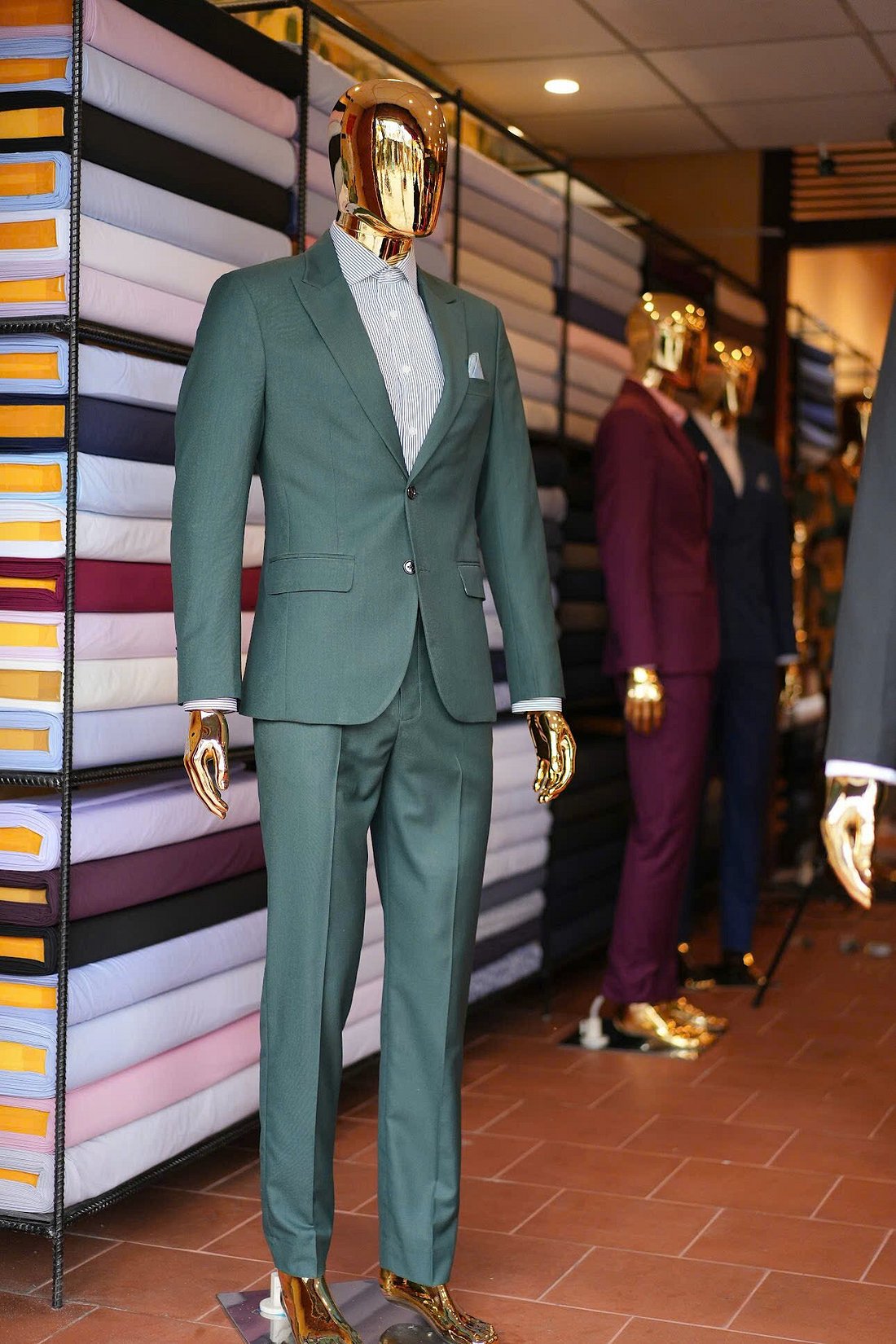
When you ask “How Much for a Suit in Hoi An?”, the style you choose plays a significant role in shaping the final price. Style is more than visual preference — it determines how much fabric is needed, how complex the cutting is, and how much tailoring skill is required. Different styles come with different levels of craftsmanship, which is why the same tailor may charge different prices depending on the design you select.
4.1. Classic vs. Modern Cuts: Why Prices Differ
Classic suits typically come with relaxed silhouettes, wider lapels, and timeless proportions. These suits are structurally simpler and easier for tailors to execute, which keeps the cost in the low-to-mid range.
However, modern and slim-fit styles require sharper lines, precise tapering, and closer adjustments to match your body shape. This level of detail demands more fittings, more tailoring hours, and enhanced precision — all of which increase the overall price. If you prefer a sharp, fitted look, expect to pay slightly more for the advanced craftsmanship.
4.2. Single-Breasted vs. Double-Breasted: Construction Complexity
The jacket style significantly influences the cost of a suit in Hoi An.
-
Single-breasted jackets are simpler and require less fabric and fewer construction steps, making them the most budget-friendly option.
-
Double-breasted jackets, on the other hand, require more fabric, more internal structure, and meticulous symmetry for the overlapping panels and button placement.
Because of this, double-breasted suits are usually priced higher due to the added labor and fabric consumption.
4.3. Lapels, Vents, and Pockets – Small Details, Big Impact
Style details may look small, but they affect pricing more than many buyers expect.
-
Peak lapels require more precise shaping and stitching compared to notch lapels.
-
Double vents need extra fabric and careful construction to maintain structure and comfort.
-
Specialized pocket styles, such as ticket pockets or angled pockets, also demand more tailoring work.
When combined, these stylistic features can significantly influence How Much for a Suit in Hoi An.
4.4. Formal vs. Casual Styles and Their Fabric Requirements
Your style choice also dictates the type of fabric needed.
-
Formal suits typically use high-quality wool, smooth linings, and classic hues.
-
Casual styles, like linen or unstructured suits, require lighter, more breathable materials.
-
Trend-focused designs often use textured fabrics or bold patterns, which are usually premium-priced.
Since fabric cost is one of the biggest contributors to the total price, your stylistic direction indirectly determines your budget.
4.5. Two-Piece vs. Three-Piece: More Pieces, Higher Cost
Choosing a two-piece suit (jacket + trousers) is the most cost-efficient option. However, if you upgrade to a three-piece suit (with a vest), the cost will naturally rise. The additional piece requires more fabric, more fitting time, and extra construction steps. For buyers who want versatility and a more polished look, the upgrade is often worth it — but it does raise the total cost.
4.6. Custom Style Requests Increase the Final Price
If you request unique or designer-inspired styles — such as hand-stitched lapels, contrasting linings, monograms, specialized button arrangements, or unusual silhouettes — the tailor may need to draft new patterns or perform more detailed handwork.
These customizations elevate the craftsmanship, but they also increase the final price. The more specialized the style, the more you should expect to invest.
5. Tailor Skill – Why the Same Suit Can Have Different Prices
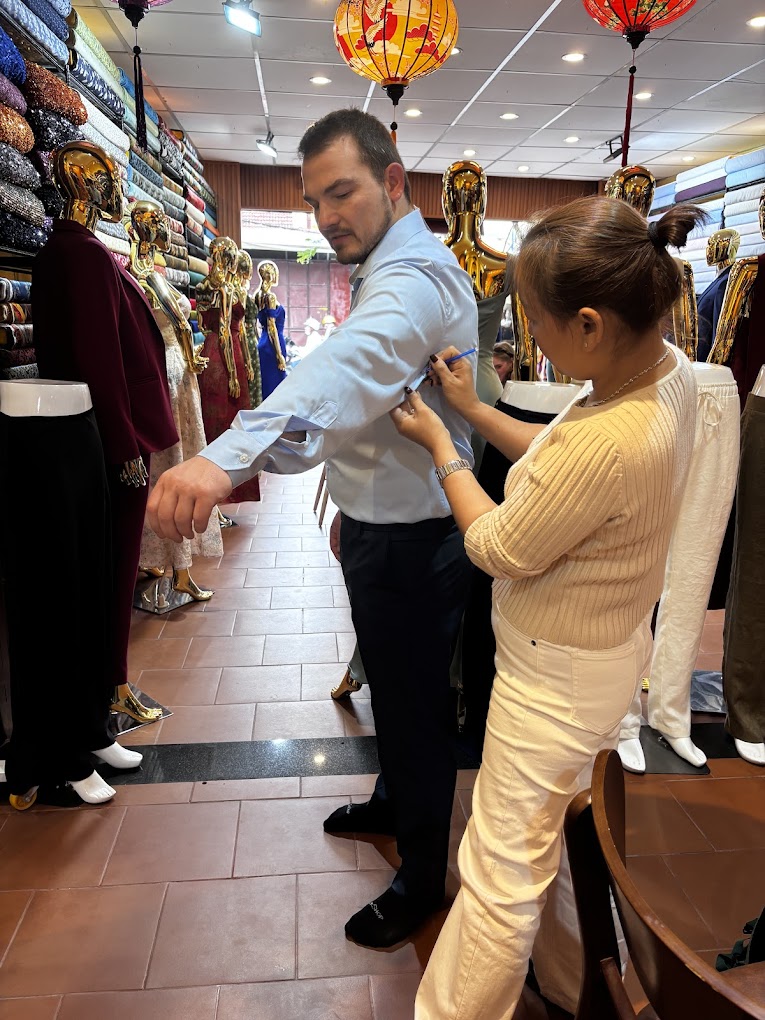
When asking How Much for a Suit in Hoi An, one of the most important yet often overlooked factors is the skill level of the tailor. Even when two shops use similar fabrics and offer similar styles, the craftsmanship behind each suit can vary dramatically—leading to different prices. In Hội An, where hundreds of tailoring shops exist, the gap in expertise can significantly influence both quality and cost.
5.1. Experience and Reputation Shape the Pricing
Tailors with decades of experience, strong reputations, and established craftsmanship usually charge higher prices. These artisans have refined their techniques over many years, understand complex body shapes, and deliver consistently accurate results. Their long-standing trust with customers justifies higher rates. Meanwhile, smaller or newer shops may offer lower prices to attract clients, even if their skill level is still developing.
5.2. Precision in Measurement and Body Analysis
High-skilled tailors do more than just measure shoulder width and chest size. They analyze posture, shoulder slope, back curvature, stance, and natural body asymmetry. This depth of understanding ensures the suit fits comfortably and enhances the wearer’s silhouette. Such precision requires training and time, making the craftsmanship behind the final answer to How Much for a Suit in Hoi An significantly more valuable.
5.3. Superior Techniques and Handcrafted Details
Some suits require hand-sewn finishing touches that only experienced tailors can perform. Techniques such as hand-padded lapels, hand-stitched buttonholes, and manual construction of canvas layers demand advanced expertise. These handcrafted elements take longer and require artisanship, resulting in higher costs. At the same time, they add exceptional durability, structure, and luxury to the suit’s final appearance.
5.4. Quality Control and Attention to Detail
High-end tailors follow strict quality control processes, inspecting each seam, checking balance, confirming alignment, and ensuring flawless symmetry. They often redo sections that do not meet their standards. This meticulous approach adds hours—sometimes days—to the creation process. Because of this, shops with stronger quality control protocols typically charge more when customers ask How Much for a Suit in Hoi An.
5.5. Ability to Handle Complex Designs
Not all tailors can work with intricate styles such as double-breasted suits, structured shoulders, or full-canvas construction. Complex designs demand advanced tailoring techniques and deeper knowledge of fabric behavior. As a result, shops that specialize in these high-end styles naturally set higher prices compared to shops that focus on basic, simpler suits.
5.6. Consistency in Fit and Final Finish
A skilled tailor ensures that every detail—from lapel roll to sleeve pitch—follows classic tailoring standards. They know how to make adjustments during fittings so the suit moves with the body effortlessly. Consistency in results builds customer confidence and justifies a higher price bracket. Meanwhile, inconsistent craftsmanship can lower the cost but also reduce satisfaction and long-term wearability.
5.7. Master Tailors vs. Production Tailors
Some Hội An shops employ a mix of master tailors and production tailors. Master tailors handle complex or premium orders and supervise to maintain quality. Production tailors manage simpler suits at a faster pace. This difference in skill creates price variations among shops, even when the fabrics appear identical. Master tailor involvement often increases the price due to the higher level of expertise.
6. Personalization Services Increase How Much for a Suit in Hoi An
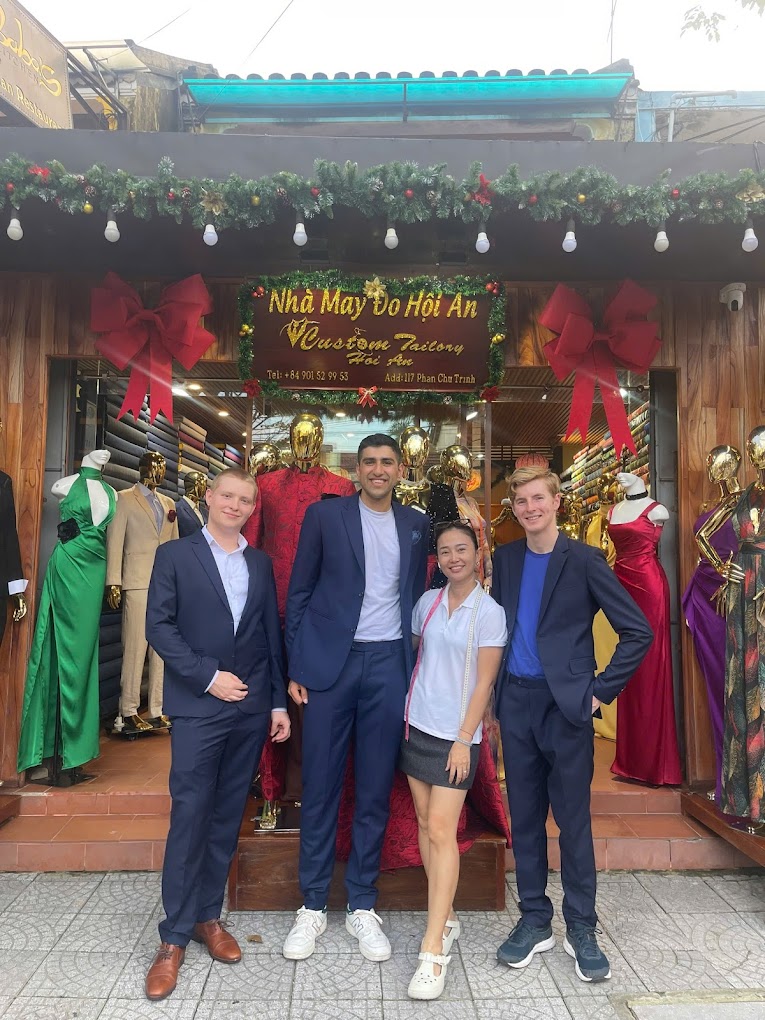
When exploring How Much for a Suit in Hoi An, personalization services play a significant role in the final price. These custom touches allow your suit to reflect your personality, body posture, and preferred style. While they add to the cost, they also elevate the overall value and uniqueness of your tailored garment.
6.1. Embroidery and Name Personalization
One of the most popular upgrades is custom embroidery. Many customers choose to add their initials, full name, wedding date, or meaningful symbols inside the jacket. This service not only makes the suit more personal but also gives it a premium, bespoke feel. Depending on the stitching complexity, embroidery may increase the overall cost of How Much for a Suit in Hoi An by a noticeable margin.
6.2. Premium Button Selection
Buttons may seem like small details, but they have a big impact on both style and price. Tailors in Hoi An offer a wide range of button materials such as horn, bone, coconut shell, metal, and mother-of-pearl. Higher-end buttons offer better durability and a more refined look. Choosing premium buttons can add an extra cost, often ranging from a few hundred thousand VND depending on the material and brand.
6.3. Unique and Customized Linings
A distinctive lining allows wearers to express their style from the inside out. Tailors provide countless options—from solid colors to printed, patterned, or even illustrated linings. Customers often select a lining that matches their personality, event theme, or aesthetic preference. Premium lining materials not only enhance comfort but also influence the final answer to How Much for a Suit in Hoi An.
6.4. Special Fit Adjustments Based on Body Posture
Some customers require additional technical adjustments to achieve a perfect fit. Tailors may modify the suit based on shoulder slope, curved posture, asymmetric shoulders, or specific body proportions. These adjustments demand more time, skill, and precision from the tailor. As a result, advanced posture correction contributes to the upward variation in How Much for a Suit in Hoi An.
6.5. Multiple Fittings for Higher Precision
High-end tailoring often involves one to three fitting sessions. Each fitting allows the tailor to refine measurements, improve balance, adjust the shoulder line, or perfect the sleeve pitch. While basic services may offer only one fitting, premium tailoring includes several rounds to ensure excellence. More fittings require more labor, which naturally increases the cost.
6.6. Exclusive or Signature Tailoring Requests
Some customers request unique structural changes such as Milanese buttonholes, hand-stitched lapels, custom canvas structure, or stylistic modifications inspired by European tailoring houses. These requests are labor-intensive and require advanced craftsmanship. Because of this, exclusive detailing plays a major role in determining How Much for a Suit in Hoi An for luxury-level tailoring.
7. Price Summary – How Much for a Suit in Hoi An by Segment
7.1. Segment 1 – Affordable
-
Polyester/cotton
-
24–48 hours
-
2,500,000 – 4,500,000 VND
Best for the most budget-friendly answer to How Much for a Suit in Hoi An.
7.2. Segment 2 – Mid-range
-
Wool blend 50–70%
-
2–3 days
-
5,000,000 – 8,000,000 VND
This is the most popular price range for travelers asking How Much for a Suit in Hoi An.
7.3. Segment 3 – High-end
-
Wool 80–100%
-
Premium linen
-
Canvas
-
Multiple fittings
-
8,000,000 – 14,000,000+ VND
Ideal for professionals and suit enthusiasts.
8. Tips to Optimize Your Budget When Asking “How Much for a Suit in Hoi An”
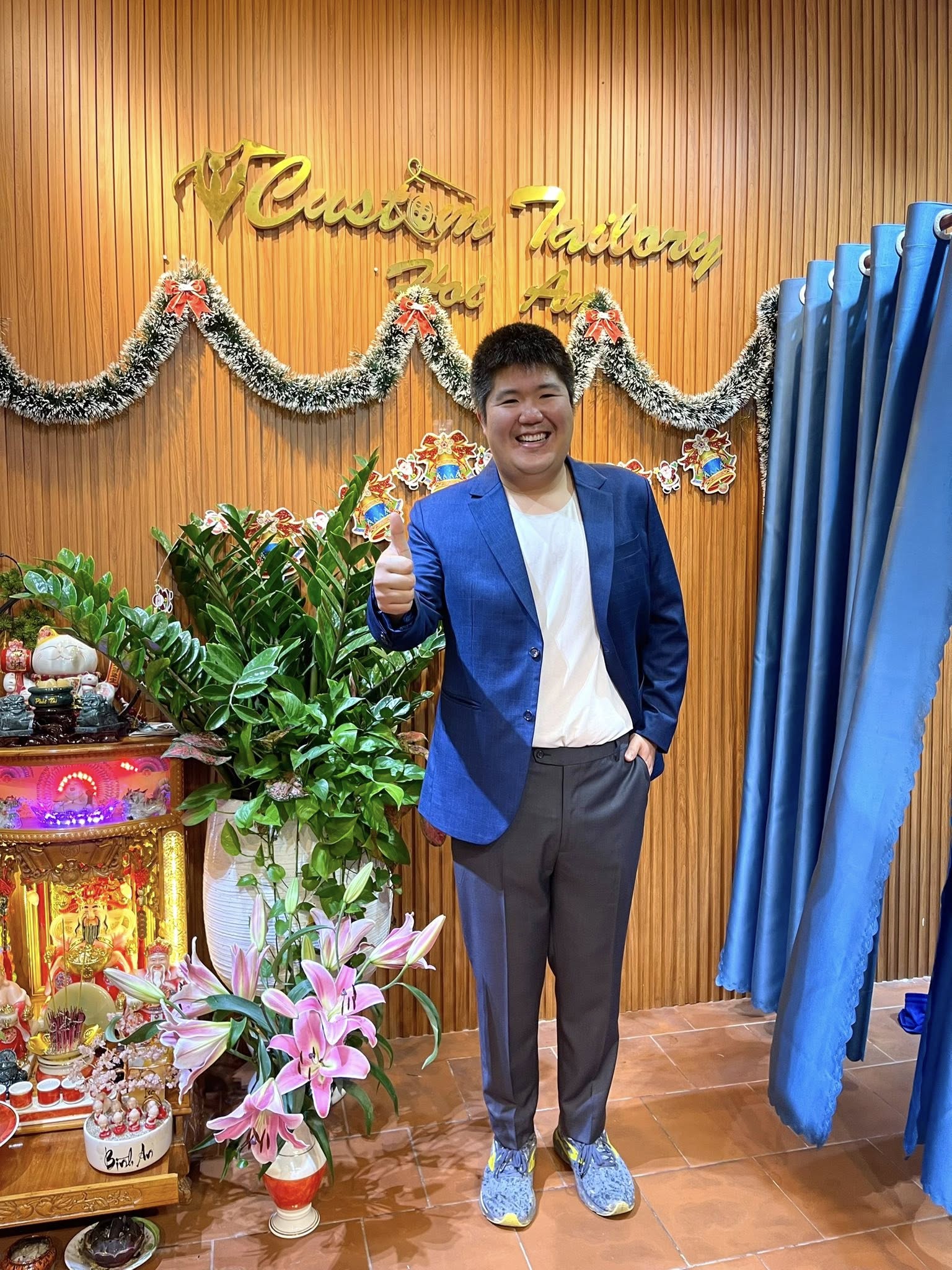
8.1. Visit in the morning
More time for fittings → fewer mistakes → avoid rush fees.
8.2. Choose wool blends instead of 100% wool
Still premium but saves 30–50%.
8.3. Order 2–3 suits for discounts
Most shops offer 5–15% off.
8.4. Avoid 6-hour express service unless necessary
It significantly increases the price.
8.5. Go to reputable tailor shops
They help you choose the right fabric without unnecessary spending.
9. So, finally — How Much for a Suit in Hoi An?
Depending on your budget and needs, prices range from:
-
Affordable: 2,500,000 – 4,500,000 VND
-
Mid-range: 5,000,000 – 8,000,000 VND
-
High-end: 8,000,000 – 14,000,000+ VND
The important thing is not just knowing How Much for a Suit in Hoi An, but understanding why the price is fair — and how to optimize your spending to own a high-quality, well-fitted, stylish suit that matches your personality.
If you want a high-quality suit with clean form and reasonable pricing, Custom Tailory Hoi An is one of the most trusted tailor shops in town.
📍 Address: 117 Phan Chu Trinh, Hoi An, Da Nang – Google Map
📞 Hotline: 0901 529 953
🌐 Fanpage: Here
🌐 Website: https://www.customtailoryhoian.com/